

The $10 burglary that changed the rules for police shootings
A landmark Supreme Court case


On October 3, 1974, Edward Eugene Garner broke into an unoccupied house on Vollintine Avenue in North Memphis, Tennessee. Mrs. Daisey Bell Statts, who lived next door, heard the sound of glass breaking and called police.
Two officers responded. While Officer Leslie Wright radioed the dispatcher to say they were at the scene, his partner Elton Hymon went to the back of the house, carrying a flashlight with five D-cell batteries in his right hand and a revolver in his left hand. A door slammed. Hymon saw someone running and heard a sound coming from the chain link fence in the backyard.
The events that night — following a routine burglary — would change the rules governing when police in America may use deadly force, thanks to a landmark ruling by the U.S. Supreme Court. Even though the facts were very different in the ICE’s agent’s killing of Renee Good last week in Minneapolis — for one thing, she was not a suspect — some of the same reasoning may apply if that case makes it into court.
On that night in 1974, Hymon shined his flashlight at the six-foot-tall fence. He saw someone he described as a “male black” who appeared to be 17 or 18 years old and seemed to be unarmed. The officer yelled, “Halt. Police!” and started walking toward him.
When Garner kept going, nearing the top of the fence, Hymon figured that he had one last chance to stop him. The officer fired his Smith & Wesson 38-caliber revolver, hitting Garner on the right side of the head. He fell across the top of the fence. The two officers brought him down and called for an ambulance.
It turned out that Garner was only 15 years old. An eighth grader who was 5’4” tall, and weighed between 100 and 110 pounds, he died on the operating table. In his possession was $10 and a purse taken from the house.
In Tennessee as in many other states, the law entitled police officers to use “all necessary means” to arrest a fleeing suspect. Hymon, the police officer who shot Garner, was also black.
In an interview decades later with a black community newspaper the Tri-State Defender, he recalled the thoughts running through his head as the 15-year-old was being rushed to a hospital: Hymon said he “began to pray that the suspect would survive.”
When he heard that Garner had died, Hymon recalled, “I became unraveled and shaken to my very core.” He supervisor offered him a shot of bourbon and counseling: “I refused the counseling but drank the bourbon immediately.”
When a police investigation ended and he returned to duty, Hymon recalled, fellow officers greeted him as a hero. “What I resented was the implication that after killing an African American I was acceptable.”
A father’s cause
A few weeks after the killing, Garner’s father, Cleamtee Garner, a decorated World War II veteran who worked as a packer at a Memphis depot, contacted Walter Bailey, a local lawyer. Garner told him he wanted to sue the police department over the killing of his son, the youngest of his seven children.
As Janell Ross wrote for NBC News, Garner “told Bailey that he knew his son had done something wrong” and might have had to serve time in jail. “But the penalty for burglary in the United States, for making off with $10, shouldn’t be immediate death.”
As it turned out, six justices on the Supreme Court agreed. They set a standard for the use of deadly force that survives to this day.
The lawyers representing Cleamtee Garner sued on the grounds that the Tennessee law permitting the shooting of fleeing felons was a violation of the Fourth and Fourteenth Amendments. But the court wound up accepting only part of that claim; it ruled on March 27, 1985 that the Tennessee law violated the Fourth Amendment.
That amendment begins, “The right of the people to be secure in their persons, houses, papers, and effects, against unreasonable searches and seizures, shall not be violated.”
When a government agent takes someone’s life unreasonably, Justice Byron White wrote, there is a potential case under the Fourth Amendment because a life is being seized. “The intrusiveness of a seizure by means of deadly force is unmatched. The suspect’s fundamental interest in his own life need not be elaborated upon. The use of deadly force also frustrates the interest of the individual, and of society, in judicial determination of guilt and punishment. Against these interests are ranged governmental interests in effective law enforcement.”
Still, White wrote, using deadly force to prevent any kind of felon from escaping is “constitutionally unreasonable.”
“It is not better that all felony suspects die than that they escape. Where the suspect poses no immediate threat to the officer and no threat to others, the harm resulting from failing to apprehend him does not justify the use of deadly force to do so.”
With those words, White’s opinion set the new standard for determining if a shooting by police is constitutionally permitted: the officer’s life or those of others must be at risk. He added:
“It is no doubt unfortunate when a suspect who is in sight escapes, but the fact that the police arrive a little late or are a little slower afoot does not always justify killing the suspect. A police officer may not seize an unarmed, nondangerous suspect by shooting him dead. The Tennessee statute is unconstitutional insofar as it authorizes the use of deadly force against such fleeing suspects.”
Impact of the ruling
In 1994, the Journal of Criminal Law and Criminology published a study by Abraham N. Tennenbaum that measured the impact of the Supreme Court’s ruling. He pointed out that deadly force has been an issue for as long as police have been carrying guns. An 1858 New York Times editorial observed, “A policeman has no right to shoot a man for running away from him” and also questioned why police carry revolvers at all.
Before the Garner ruling, Tennenbaum observed, shooting any fleeing felon, regardless of the nature of the felony, was permitted in at least 24 states. As he noted, the number of felonies had greatly expanded over centuries and the “any felony” rule, a carryover from English common law, had since been dropped by England itself.
And what was the impact of the Supreme Court’s invalidation of the “any felony rule” in the Garner case? A 16 per cent reduction in police shootings nationwide since the ruling — there were 60 fewer people killed by police each year, Tennenbaum found.
The killing of Renee Good
Renee Good, a mother of three, was shot three times at close range Jan. 7 by Immigration and Customs Enforcement officer Jonathan Ross as she sat behind the wheel of her Honda Pilot on a Minneapolis street.
The case has sparked a national controversy over ICE tactics. President Donald Trump and Vice President J.D. Vance contend that Good was threatening the ICE agent’s life with her car. By pre-judging the case, they have imperiled the independence of the investigation being conducted by the Justice Department. State officials are also seeking to investigate but say the feds have refused to cooperate with them.
If Good did not pose a threat to Ross’s life or to other people, her killing would have been prohibited under the Supreme Court’s Garner ruling. It would be an unreasonable “seizure” of a life under the Fourth Amendment.
Hence the importance of videos showing the movements of Ross and Good’s SUV. Two of the shots were fired from the side of Good’s vehicle, raising questions about whether the officer was in any danger by that point. The first shot was fired as the officer was moving away from the front of the vehicle, according to the Washington Post.
The full context is crucial. In a unanimous Supreme Court ruling last year, the justices invalidated a Fifth Circuit Court of Appeals standard that restricted analysis of the legality of an officer’s use of deadly force to the “precise moment of threat” — in this case, the last two seconds of the encounter. The nine justices, in an opinion by Justice Kagan, said all the circumstances of the encounter have to be considered in the legal analysis of a shooting.
The court’s summary of the case said:
Respondent Roberto Felix, Jr., a law enforcement officer, pulled over Ashtian Barnes for suspected toll violations. Felix ordered Barnes to exit the vehicle, but Barnes began to drive away. As the car began to move forward, Felix jumped onto its doorsill and fired two shots inside. Barnes was fatally hit but managed to stop the car. About five seconds elapsed between when the car started moving and when it stopped. Two seconds passed between the moment Felix stepped on the doorsill and the moment he fired his first shot.
“A court deciding a use-of-force case cannot review the totality of the circumstances if it has put on chronological blinders,” the Supreme Court said. It did not rule on whether Felix was justified in shooting Barnes, leaving that to the lower courts to consider.
Whizzer White
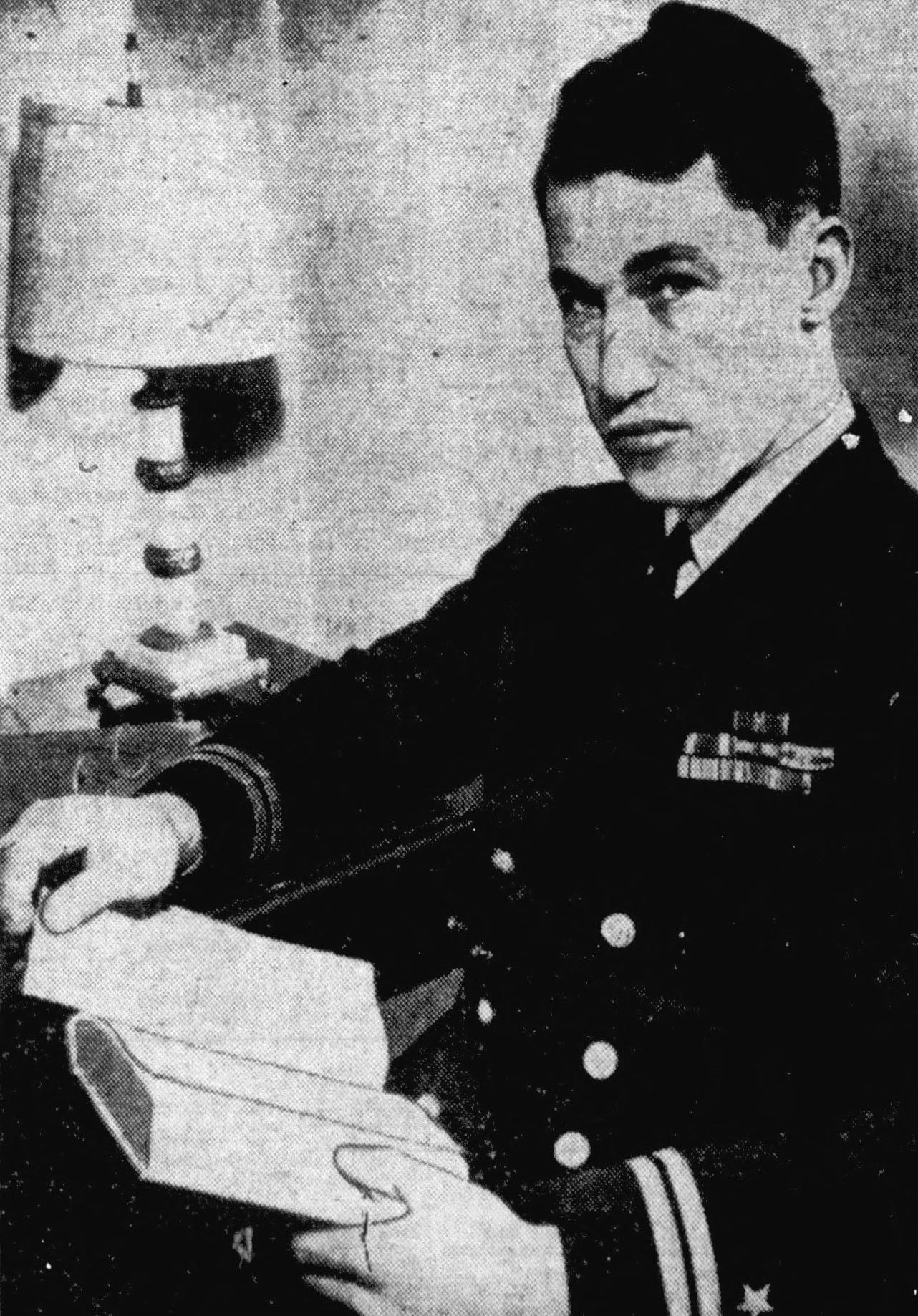
Byron White’s parents never finished high school. They raised him and his older brother in Wellington, a beet sugar farming town in northern Colorado. Both became Rhodes Scholars. But it was Byron who became nationally known as a college football player, earning the nickname he despised: “Whizzer.” He lettered in three sports at the University of Colorado, drew straight As and was elected student body president.
For months, sportswriters obsessed over whether White would accept the Rhodes scholarship or take a $15,800 offer to play for the Pittsburgh football Pirates. He did both, by persuading the Rhodes Trust to delay his entry for one term.
While on a European vacation from his studies at Oxford University, he met John F. Kennedy, son of the U.S. Ambassador to Britain, Joseph P. Kennedy.
During World War II, White took a break from Yale Law School to play for one season with the Detroit Lions and then joined the Navy as an intelligence officer. When John Kennedy won the presidency in 1960, he named White to the number two role in the Justice Department and, in 1962, nominated him for the Supreme Court.
In his 31 years on the court, White couldn’t be pigeonholed as a liberal or conservative. He dissented from the Roe v. Wade ruling that established a national right to abortion. On criminal justice issues, he sometimes took the side of law enforcement.
White wrote an extended opinion dissenting from the court majority in Miranda v. Arizona, which established that confessions made by defendants in custody are only admissible if they had been told of their right to remain silent and speak to an attorney.
White warned that, “In some unknown number of cases, the Court's rule will return a killer, a rapist or other criminal to the streets and to the environment which produced him, to repeat his crime whenever it pleases him. As a consequence, there will not be a gain, but a loss, in human dignity.”
So it seems surprising that it was Justice Byron White who wrote the majority opinion in Tennessee v. Garner, ruling that the police officer’s shooting of Edward Garner was unjustified. The case isn’t mentioned in the 592-page biography of White written by Edward Hutchinson, one of White’s former clerks: The Man Who Once Was Whizzer White.
Hutchinson does point out that White strove to prevent journalists and historians from peering behind the public record of his life. (Murray Kempton wrote that White “bears scars and cannot be blamed for still vividly resenting those awful Sunday afternoons when he stood in chilling locker rooms, his head ringing, his senses numbed, and his bruises bared while the writers had at him about why he zigged when he might more politicly have zagged.”)
In 1986, White and three of his law clerks spent weekends shredding 25 years of his Supreme Court case files. One clerk remembered thinking about “how much history was going down the chute.”
The court files
Thankfully, we have the court files of Justice Lewis Powell, at the Washington and Lee University School of Law, to give us a window into the deliberations leading to the Tennessee v. Garner ruling.
On August 24, Powell dictated a memo after reading the briefs. “I have perhaps become unduly interested in this case and talked into the dictating machine more than my secretary — or the law clerk — appreciates.” He added that “the range of felonies is quite wide, and clearly it would be unreasonable if an officer were authorized to shoot any fleeing felon regardless of the crime and the circumstances.”
White and others on the court said in their private conferences that they didn’t believe the Tennessee law was unconstitutional on its face but that the way it was being applied in Garner’s shooting violated the Constitution.
In a November 9, 1984 memo to the other judges, Chief Justice Warren Burger wrote, “Although I find it difficult to say the action of the officer was unreasonable, I am prepared to affirm [a lower court ruling] on the narrow basis Byron and some others discussed.” He said he had assigned the writing of the majority opinion “to Byron.”
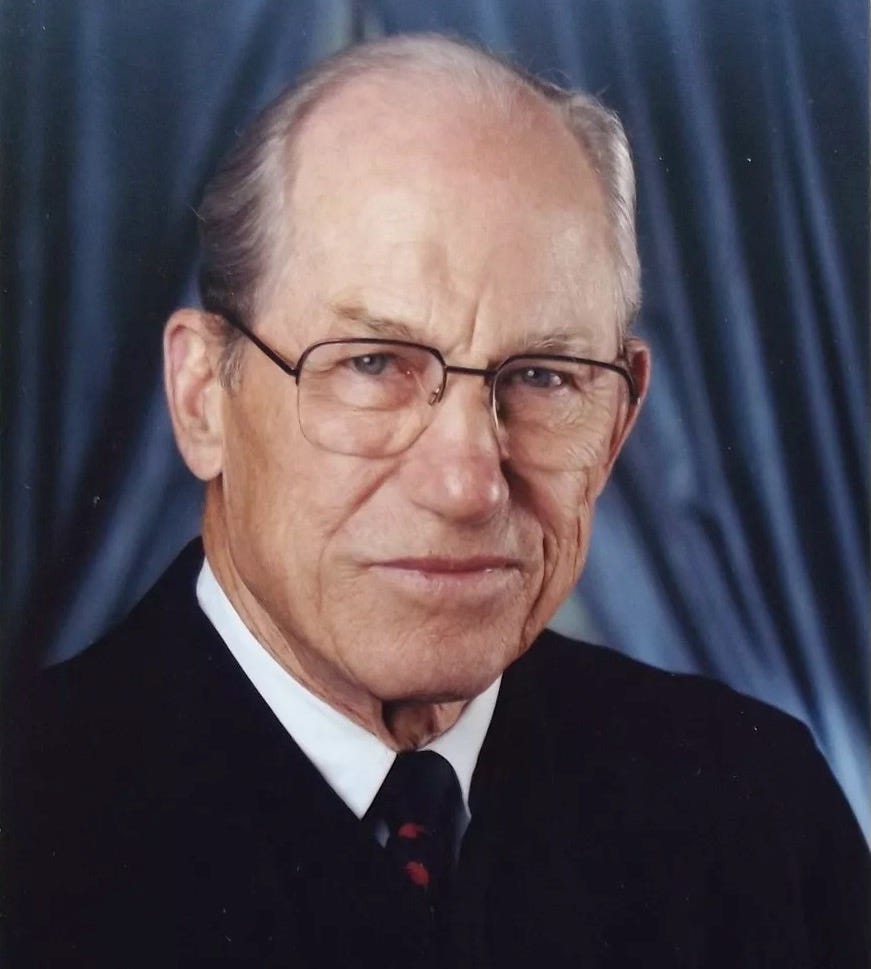
It seems from Burger’s note and others in the files that White initially had close to the unanimous support of the court in his proposed opinion. But on December 19, 1984, Justice Sandra Day O’Connor wrote:
Dear Byron, As you recall, at Conference I voted to affirm. You have written persuasively in your majority draft, but I intend to put forward a different view in a dissent. Sincerely, Sandra
The next day, Chief Justice Burger wrote White that while he agreed with the “result,” he would “defer joining on the opinion until like the old lady in Peoria, I read what I am writing out in a concurring opinion.”
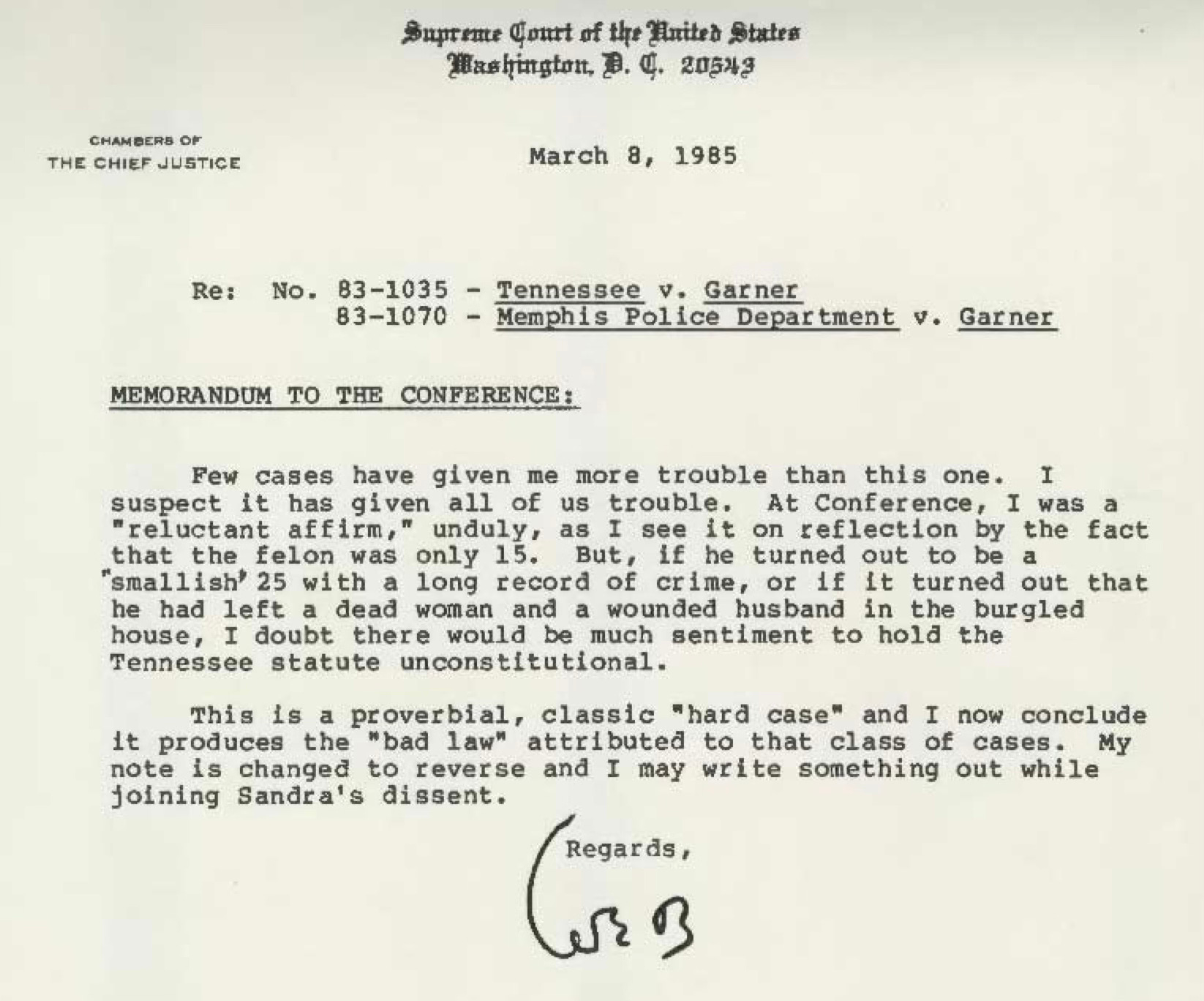
By March 1985, Burger had changed his mind. He would now join O’Connor in dissenting. “Few cases have given me more trouble than this one,” Burger said, “I suspect it has given all of us trouble.” His initial vote was motivated by the fact that the “felon was only 15,” but if he been “a ‘smallish’ 25 with a long record of crime, or if it turned out that he had left a dead woman and a wounded husband in the burgled house, I doubt there would be much sentiment to hold the Tennessee statute unconstitutional.” He referred to the dictum, “hard cases make bad law”.
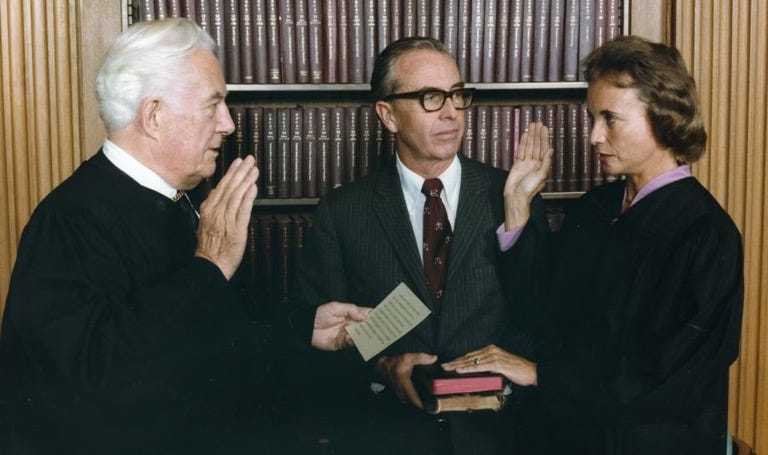
Five justices joined White in ruling against Tennessee: Lewis Powell, Harry Blackmun, William Brennan Jr., Thurgood Marshall and John Paul Stevens . Burger and Justice William Rehnquist joined in O’Connor’s dissent. She wrote,
By disregarding the serious and dangerous nature of residential burglaries and the longstanding practice of many States, the Court effectively creates a Fourth Amendment right allowing a burglary suspect to flee unimpeded from a police officer who has probable cause to arrest, who has ordered the suspect to halt, and who has no means short of firing his weapon to prevent escape. I do not believe that the Fourth Amendment supports such a right, and I accordingly dissent.
Case settled
Cleamtee Garner lived long enough to learn that the Supreme Court had decided in his favor in his son’s death. But he died at the age of 74, a little more than a year before the city of Memphis settled with Garner’s lawyer for $300,000, plus $145,000 in court and legal costs, in 1995.
And there was another consequence. As the NBC News story pointed out, “Garner unquestionably changed the way that police officers in Memphis and around the country understood that they were supposed to handle different situations,” said Michael Rallings, Memphis’ police director. “It forever altered policing.”
As for Officer Elton Hymon, he served as a police officer for more than 35 years, retiring with the rank of captain and becoming an ordained minister. Walter Bailey, the lawyer representing Garner, said Hymon deserves the community’s thanks for telling the truth — that he believed that the suspect was unarmed.
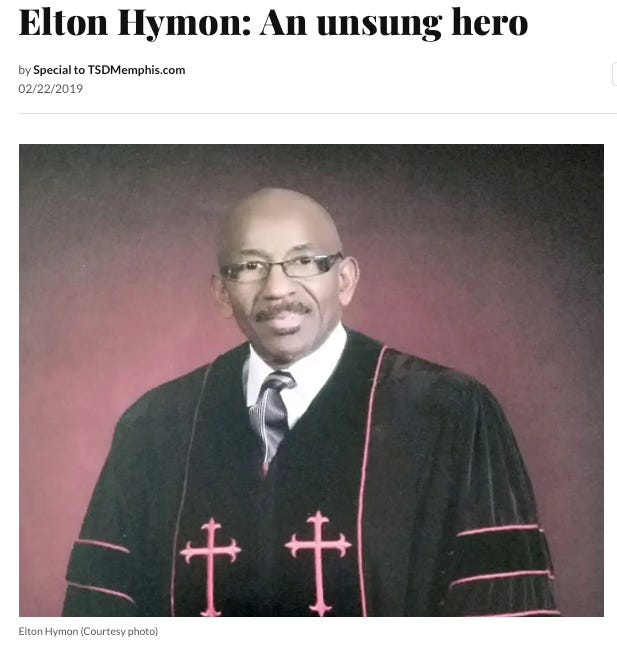
“The truth was young Edward Garner did not pose a threat to him or anyone else,” Bailey told the Tri-State Defender, “He knew Garner was unarmed for he saw his hands as he attempted to scale the fence.”
“We could have well lost that case if Officer Hymon had testified to the contrary, as the police culture demanded. I feel very strongly that the testimony of Officer Hymon has saved thousands of lives and he truly is an unsung hero.”
In the end, Cleamtee Garner’s quest for justice made a difference.