

Every Sunday morning at 11, beginning in 1999, Venezuelans could tune into a call-in show hosted by their charismatic president, Hugo Chávez.
“Anyone could call in and talk to the president,” wrote William Neuman in his book, Things Are Never So Bad That They Can’t Get Worse: Inside the Collapse of Venezuela.
“It was democracy in action. A direct channel to the most powerful man in the country, who took the time to listen and chat with ordinary citizens.” The show, titled Alo, Presidente, began on radio and expanded to television in 2000.
It could go on for as long as eight hours. In addition to taking calls, Chávez featured special guests, including Cuba’s Fidel Castro.
Part of the appeal was its unpredictability. As Neuman noted, Chávez “issued orders to ministers, criticized them, embarrassed them, put them on the spot. He made surprise announcements, ordered troop movements, berated his enemies, carried out diplomacy.” In 2002, he delighted the audience by firing executives of the state-run oil company on air, two years before Donald Trump made showy firings a trademark of The Apprentice.
The Venezuelan leader mastered the medium. His government had a TV station and unveiled a 24-hour cable news outlet. But that wasn’t enough. Chávez had the power to pre-empt broadcasting on all television and radio stations so he could spread his propaganda more widely — and he did so 2,377 times, according to Espacio Público, an organization cited by Neuman.
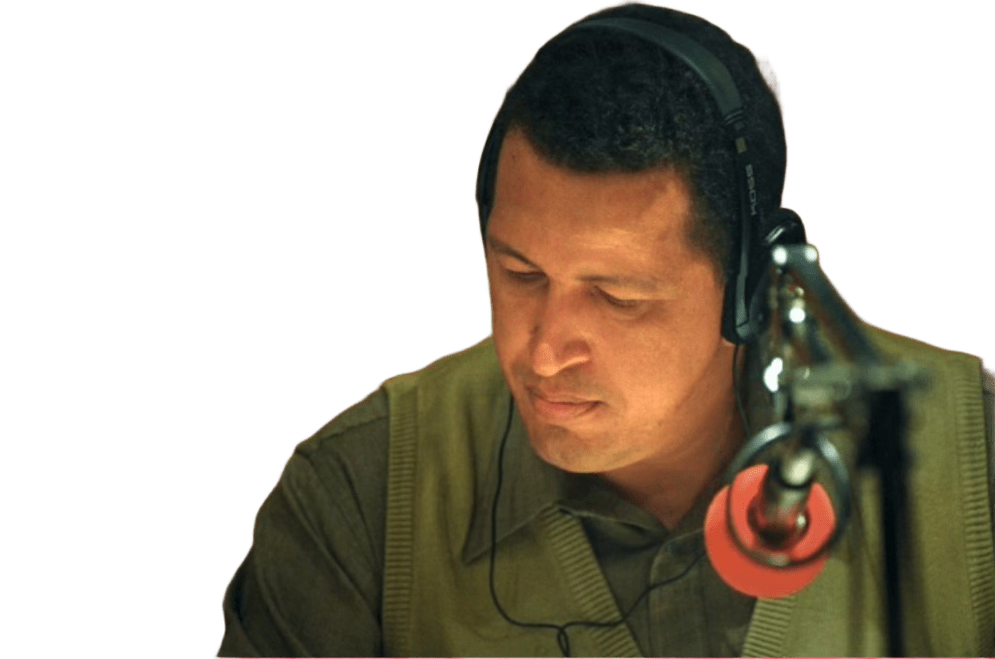
As Tom Shannon, an American diplomat, told Neuman, “This idea of communicating directly with the people, not having any mediating institution or entity and setting a media agenda almost on a daily basis—he was the first to do that. It was quite remarkable at the time and at the time it seemed a little folkloric, kind of like The Jerry Springer Show instead of government. But it was very effective.”
Fidel Castro was impressed too: “Never has a revolutionary made use of the media so effectively,” the Cuban leader wrote. And when social media became a real-time venue for news and commentary, Chávez signed on, reaching an audience of millions on Twitter.
His all-encompassing use of a medium that speaks directly to the public parallels the way Trump used Twitter, and later Truth Social, to rally his followers and impose a political agenda.
The U.S. president can’t order the networks to carry his speeches live, but he can pressure them. Whether to air Trump’s planned Thursday night speech on “free and fair elections” is the thorny question facing television executives leery of his false claims about the 2020 election being rigged against him.
Chávez’s skill at television helps explain why he and his successor maintained an iron grip on Venezuela despite the collapse of its economy, the widespread suffering of its people and the end of its democracy. Chávez became one of the false gods of politics, an authoritarian leader whose unquestioning followers backed him up no matter how ridiculous, dictatorial and corrupt he became.
We can and should debate the merits and demerits of socialism and capitalism. But political figures like Chávez don’t survive primarily because of ideology. It’s their cultlike command of their backers that makes the difference.
The damage that was done by Chávez shows us why competence and experience in government are the bare minimum we should look for in selecting leaders. Beware the Graham Platner-style candidate whose sole qualification for office is appearing good on TikTok.
Learning what went wrong in Venezuela is particularly important right now given the greatly expanded U.S. role following Trump’s seizure of President Nicolás Maduro.
Secretary of State Marco Rubio is exercising viceregal control over the country, according to the New York Times. “Mr. Rubio now effectively controls Venezuela’s finances, the distribution of its natural resources and its government,” the newspaper reported. Trump and Rubio are relying on a Chavista loyalist, Delcy Rodríguez, to run the country under their oversight. Her government has been severely criticized for its flailing response to a pair of earthquakes that killed or injured more than 20,000 people.
Rise of Chávez
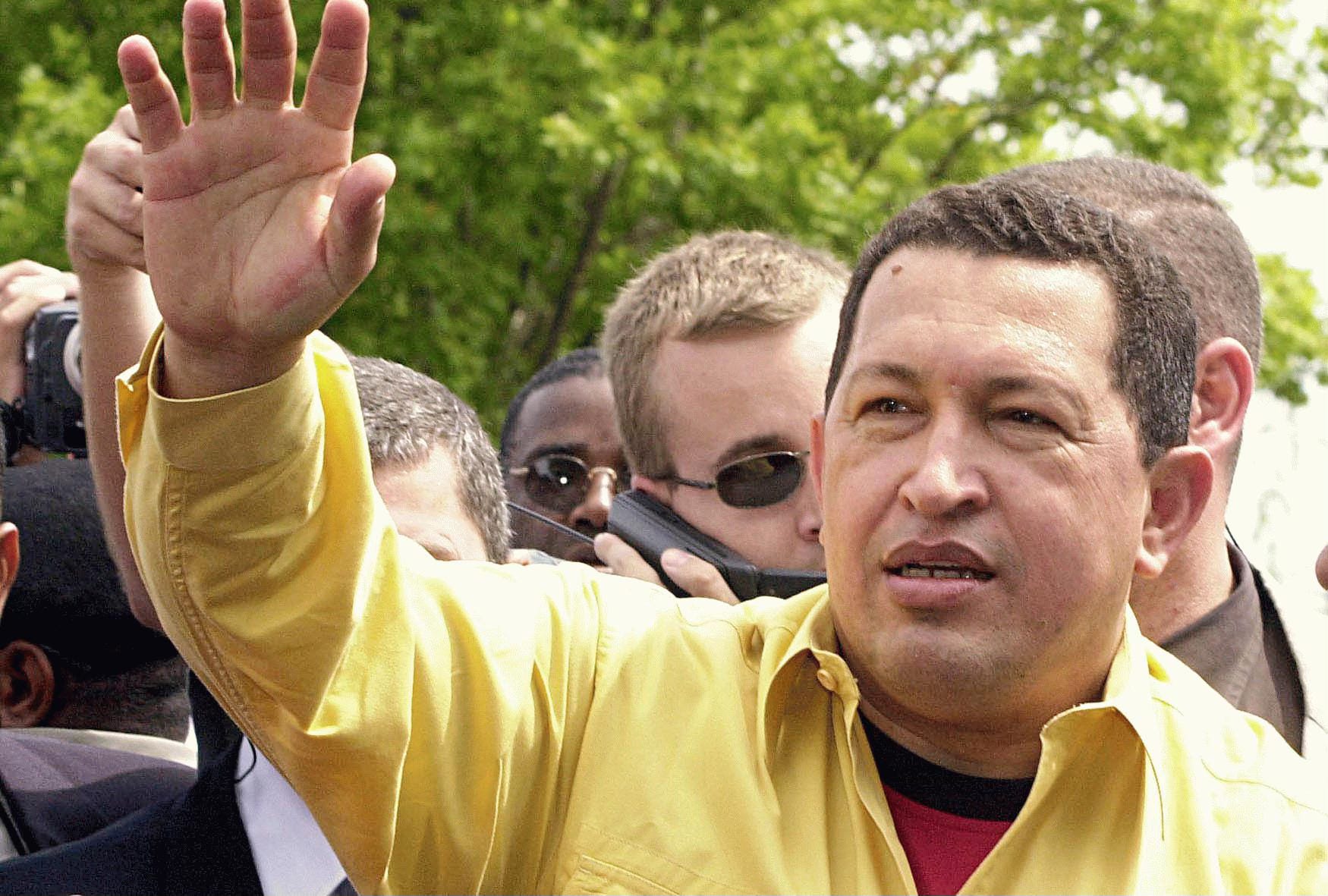
On February 4, 1992, an obscure lieutenant colonel led a coup against the elected government of Venezuela. The plotters seized government buildings and sent a tank lumbering up the steps of the presidential palace in an effort to break down the door. But President Carlos Andrés Pérez remained in control and accepted the surrender of the coup’s 37-year-old leader, Hugo Chávez.
To persuade all the rebels to submit, the president’s team gave Chávez a moment in front of the TV cameras. That move proved to be a big mistake. Chávez won attention by accepting responsibility for his failure and admitting the rebels hadn’t achieved their objectives “for now.”
As William Neuman, a former New York Times correspondent, wrote, “It was part veiled threat, part promise, part cockiness, part delusion. But what strikes me now, watching, on video, the Chávez of nearly three decades ago, is that opening line: ‘First, I want to say good morning to the people of Venezuela,’ so casual, so offhand, so sure of himself and yet so oddly courteous and self-effacing. You just sent someone to ram a tank through the door of the presidential palace—but first you want to say good morning?”
A star was born. “Chávez went to jail,” Neuman wrote, “but he was an instant celebrity, a savior, a new Bolívar,” and in 1998 he won the presidency outright in an election.
Chávez's achievement would not lie in seizing the means of production so much as seizing the means of communication. Now he could recruit and mobilize followers by building an us-against-them dynamic — exactly the kind of relationship Trump has engineered with his MAGA movement.
The Venezuelan leader connected with his supporters on television. “They were the people. He was one with them,” Neuman observed. But he also used his spotlight to vilify opponents: “the not-the-people, the ones who hated, opposed, and underestimated him, the ones he called worthless, the squalid ones…He would taunt and mock and skewer his opponents, at home and abroad. He would make announcements that his supporters knew would enrage his enemies, and because of that, they loved him even more.”
Chávez had the good fortune of presiding over Venezuela, which has the world’s largest oil reserves, at a time of high energy prices. He rode a wave of oil revenue to launch showy construction projects and heavily promoted giveaways.
Chávez and his successor Maduro scared off foreign companies and investors. They replaced competent workers in the state oil company and electric utility with unqualified loyalists. Oil production plummeted. Venezuela’s cities were plunged into blackouts, and looting broke out.
Maduro, whom Chávez named as vice president before he died of cancer, proved to be a far less skilled communicator and dithered over decisions. He became so unpopular that he had to rig elections to maintain the pretense of legitimacy.
A great deal of ruin
The pioneering economist Adam Smith once said, referring to Britain’s prospects after losing a key battle of the American Revolution, “There is a great deal of ruin in a nation.” If there is any country that proves him right, it is Venezuela.
The government’s encouragement of a black market in U.S. dollars opened up vast opportunities for corruption and hollowed out Venezuela’s private companies.
When oil prices came back down to earth, the broken economy was buried by debt. “By some estimates, Venezuela’s economy shrunk by as much as three-quarters between 2013 and 2021, the victim of economic mismanagement, corruption and — especially since 2017 — tough US sanctions,” according to the Financial Times.
Russian journalist Anatoly Kurmanaev wrote in the Wall Street Journal in 2018:
Venezuela’s collapse has been far worse than the chaos that I experienced in the post-Soviet meltdown. As a young person, I was still able to get a good education in a public school with subsidized meals and decent free hospital treatment. By contrast, as the recession took hold in Venezuela, the so-called Socialist government made no attempt to shield health care and education, the two supposed pillars of its program. This wasn’t Socialism. It was kleptocracy—the rule of thieves.
Neuman agreed in his book that Chávez wasn’t truly a socialist. He “made no serious effort to dismantle the market economy.” State control of the oil industry predated his election. “Chávez simply continued what was already there and painted it a different color.”
Despite Venezuela’s gusher of oil money, its citizens grew steadily poorer, with many suffering from hunger.
Neuman’s thoroughly researched book is a grim read, with its vivid portraits of Venezuelans whose lives have been destroyed by the regime. Many have bare refrigerator shelves and are haunted by the fear that they won’t have food to feed their children their next meal. They suffer from gang violence and the prospect of torture and murder at the hands of the regime’s security forces.
A 2019 UN report expressed concern about thousands of killings by government officers, including the Maduro-created “Special Action Force,” and said people were penalized for speaking out and denied the right to a fair trial.
The Chavista leaders who are hanging on under U.S. control have incentives to paper over the excesses of the Maduro regime. But Delcy Rodríguez, who now nominally heads Venezuela’s government, and her brother Jorge, “were among the most visible and ardent defenders of Maduro and his government,” according to Neuman.
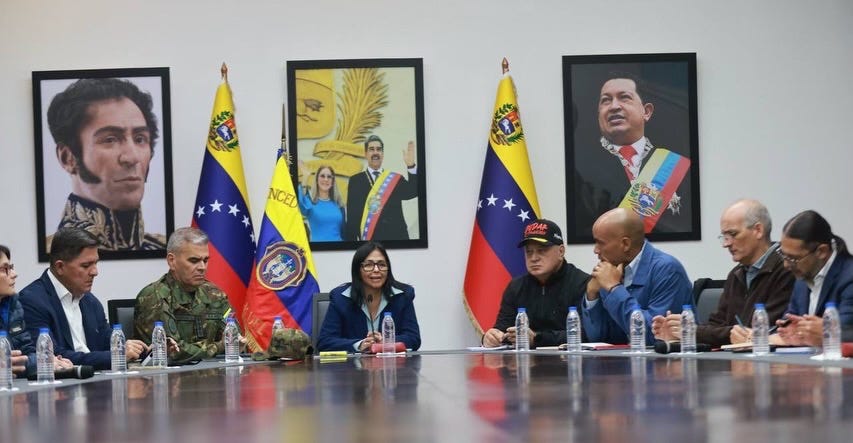
“Opinion polls show that Rodríguez is deeply unpopular among Venezuelans. In her first public appearance at a disaster site, she was heckled by angry survivors,” noted the Financial Times.
Venezuela’s plight was made worse by U.S. policymakers, including former National Security Adviser John Bolton, who pressed for sanctions that proved disastrous for living conditions in Venezuela without achieving their goal of dislodging Maduro’s regime.
The U.S. was among dozens of nations that backed Juan Guaidó, the National Assembly president who for a time claimed to be the legitimate president of Venezuela after Maduro rigged the 2018 election. It turned out that the only way to oust Maduro was to physically seize him and put him on a plane to face charges in the U.S.
As Neuman pointed out, Trump’s foreign policy initiatives didn’t improve the life of the average Venezuelan, but they surely helped his political standing among the Cuban and Venezuelan emigres in Florida.
Among the revelations of Neuman’s book, which published in 2022, are his discussions with Venezuelans who continued to express faith in the Chavista cause. One of them is a former manager at an electric plant who was thrown out of his job by a political hack and falsely accused of sabotage.
“Here was a guy who’d seen the electrical grid that he’d worked for decades to build and sustain be ruined by bad management and corruption—with great suffering for ordinary people as the result,” wrote Neuman. “And yet he said that he’d still vote for the people who had done all that.”
He would continue to follow his false gods.
In January 2016, Donald Trump was leading the pack of Republicans seeking the party’s presidential nomination. Appearing at Dordt College in Sioux Center, Iowa, he said, "I could stand in the middle of Fifth Avenue and shoot somebody, and I wouldn't lose any voters, OK? It's, like, incredible."
Now it is no longer incredible.
The Chávez-Trump comparison is right on target. My favorite line in the column: “Beware the Graham Platner-style candidate whose sole qualification for office is appearing good on TikTok.” If only TV execs hadn’t given Trump “The Apprentice.” He had zero qualifications for elective office, and they made him look like a successful businessman, despite the chain of bankruptcies.
"...celebrity, a savior, a new Bolívar.” Great. Now we're Venezuela.