

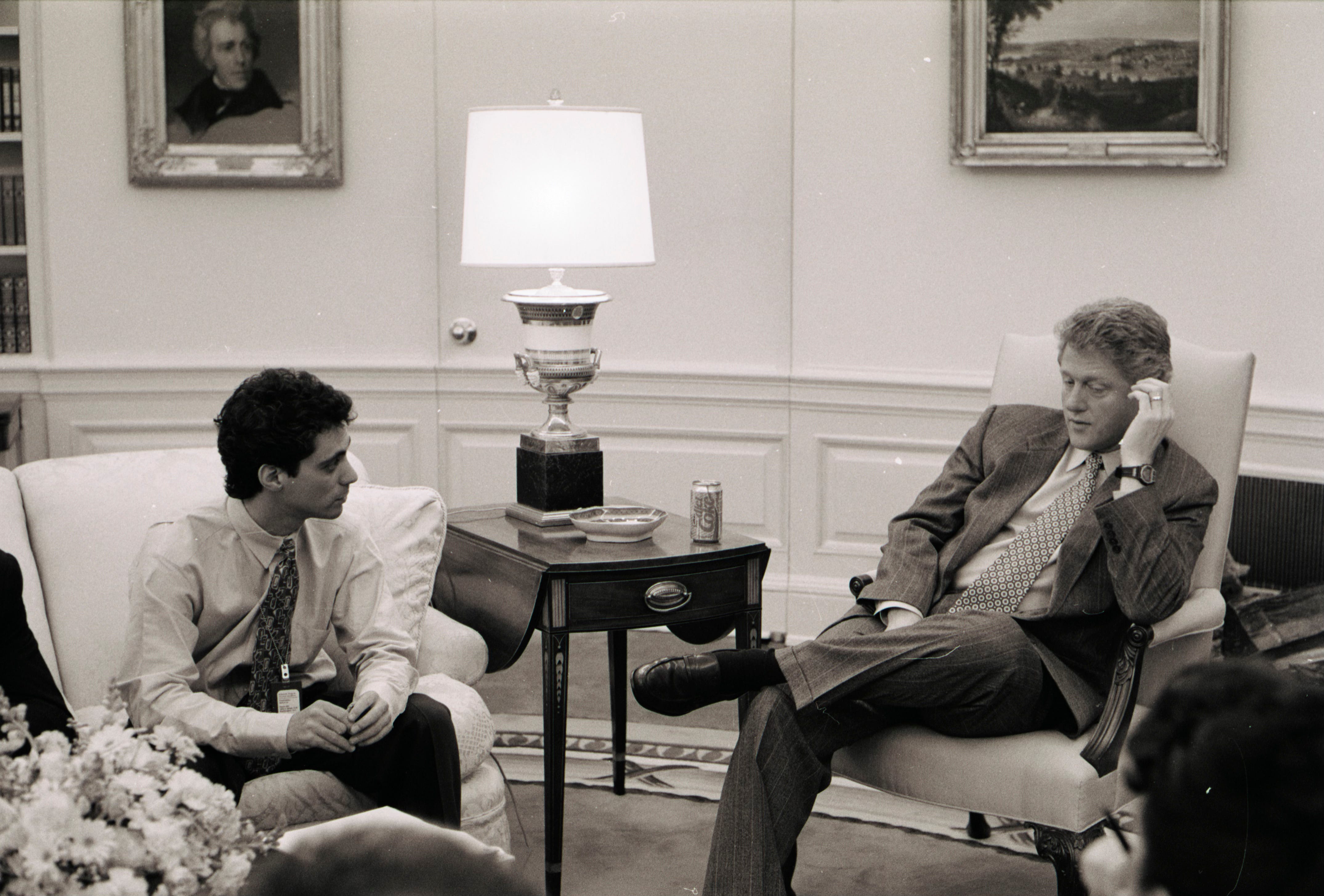
Rahm Emanuel gained a reputation for spewing the f-bomb during his early days in Democratic politics. He and two other campaign staffers infamously mailed a dead fish to a pollster Emanuel was battling. Though he landed a job as political director in the Clinton White House, his rough-edged personality soon got him demoted.
As a teenager, Emanuel lost part of his middle finger in an accident at the Arby’s restaurant where he worked part-time. That didn’t stop him from deploying the rest of his middle finger whenever he got annoyed.
“At a roast of Emanuel in September 2005, Senator Barack Obama observed that when Emanuel lost half of his right middle finger, ‘this rendered him practically mute,’” as Naftali Bendavid wrote in his book The Thumpin’.
Yet it was to Rahm Emanuel that House Democratic leader Nancy Pelosi turned in December 2004 when she was searching for someone to run the party’s congressional campaign committee.
Pelosi called Emanuel at his Michigan vacation home.
A month earlier, Democrats had lost their second straight presidential election. Republicans had even padded their margins of control in the House and Senate.
Pelosi was tired of losing, fearful of seeing her dream of being the first woman Speaker of the House slipping away and willing to gamble on a volatile personality at the helm.
It was a good choice, according to political scientist Larry Sabato, who was quoted by Bendavid saying, “You need someone whose favorite word is not ‘a’ or ‘the,’ but ‘fuck.’ And that is Rahm.”
Emanuel, about to start his second term as a congressman from Illinois, accepted the chairmanship of the Democratic Congressional Campaign Committee. But he told Pelosi there was no chance Democrats could win back the House majority in the 2006 midterms — it would take at least two elections, according to Bendavid.
Emanuel turned out to be wrong; Democrats captured the House and Senate in 2006, capitalizing on the failures of the George W. Bush administration.
An unpopular war, corruption scandals, a spike in gas prices, the incompetent response to Hurricane Katrina and the perception that Congress would “rubber stamp” anything President Bush did or said all contributed to the loss of 30 Republican House seats and six in the Senate.
Bush’s approval rating dropped as low as 37% in some September 2006 polls, roughly the same as the ratings of President Donald Trump today. It’s striking that Republicans are heading into this year’s midterms with many of the same weaknesses that doomed their 2006 campaigns—war, high gas prices, corruption scandals and a GOP majority afraid of breaking with Trump’s controversial actions and stances.
If Democrats gain control of both houses, they can make the final two years of Trump’s second term a nightmare for the president. Congress can block legislation, launch investigations, grill administration officials, prevent confirmation of executive and judicial appointees and position Democrats for home field advantage in the upcoming presidential election. All of that happened to Bush after the 2006 midterms.
The odds this November are against the Republicans. Since 1914, the president’s party has lost House seats in 25 of the 28 midterms and Senate seats in 19 elections. On average, the loss of House seats has been 25.9 and Senate 3.6 seats.
George W. Bush conceded that his party’s 2006 loss was “a thumpin’.” His successor Barack Obama admitted he took a “shellacking” in 2010, when his party lost 64 House seats.
Constant motion
Rahm Emanuel was born in Chicago in 1959, the middle of three sons of a pediatrician father and civil rights activist mother. His older brother Ezekiel has gained fame as a medical ethicist; his younger brother Ari is head of a major Hollywood talent agency.
Rahm is slight, of nearly average height and in constant motion.
A vivid portrait is captured in Bendavid’s book:
The young Emanuel often pirouetted around the house while listening to music. “Ari would be wrestling, Zeke would be pondering deep thoughts, and Rahmmy would be leaping down the stairs and doing ballet dance twirls,” said his mother, Marsha.
Thinking he might have talent, his parents sent Emanuel to ballet class, forcing his brothers to go, too, so he would not be the only boy. He was to study ballet well into his adulthood, and the idea of Emanuel performing delicate jumps and twirls always created a curious contrast with the rest of his personality, a contrast he used to throw listeners off balance.
What must have appealed to Pelosi, in choosing Emanuel to head the campaign, was his single-mindedness, his relentless thirst for victory.
He set no ideological tests for the candidates the campaign committee would recruit and support: the only thing that mattered was whether they could win. “In 2005, many Democratic activists wanted only staunchly anti-war candidates,” wrote Bendavid. “That was not Emanuel’s approach.” He invested in candidates capable of appealing to enough voters to win even solidly Republican districts.
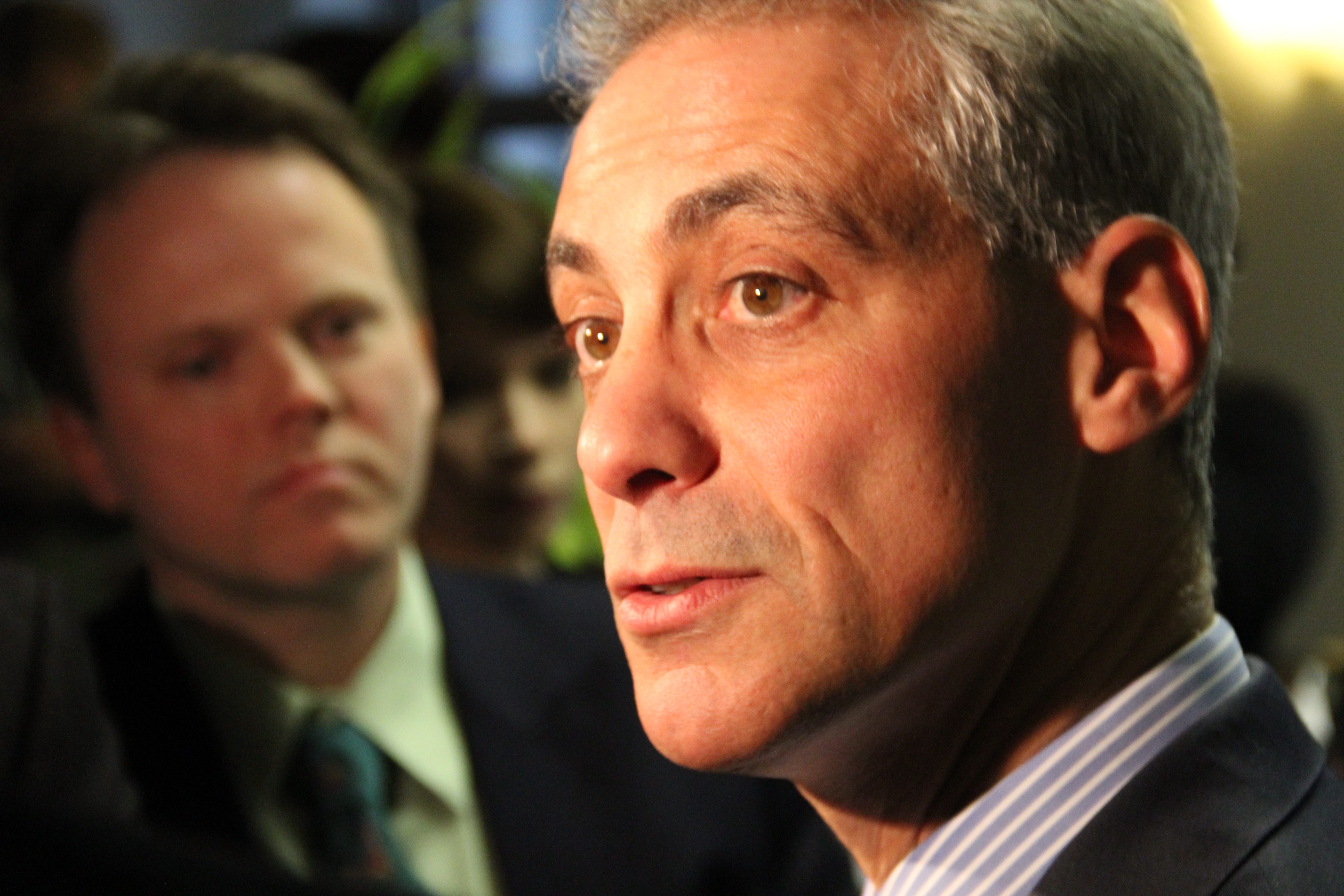
It was the one strategy that had a chance of succeeding at a time of extreme party polarization and gerrymandered districts. He brushed off criticism from the Congressional Black Caucus and the conservative Blue Dog Democrats. “I’m an equal opportunity prick to everybody,” Emanuel said. Left-leaning bloggers and activists slammed Emanuel for his willingness to back centrist and even quasi-conservative Democrats. He didn’t care.
Bendavid wrote:
He wanted to win at all costs. He had no interest in a Democratic Party that was purer than the opposition if it lost. He did not care where a candidate stood on abortion or the Iraq war, or whether that candidate was displacing a “better” Democrat, if such purity cost a House seat.
GOP blunders and scandals
But Emanuel’s success in 2006 was only partly a reflection of smart candidate selection and adept use of money and media. A much more important factor was the endless string of Republican scandals and mistakes.
President Bush failed to recognize Hurricane Katrina as the national emergency it proved to be. His decision to go to war against Iraq, with zero evidence that Saddam Hussein’s regime was involved in the terrorist attacks of 9/11, backfired with the rise of an anti-American insurgency. Hundreds of Americans died in 2006 alone; tens of thousands of Iraqis died in the civil war that followed the invasion of Iraq.
A succession of scandals involving House Republicans including the high-ranking Tom DeLay branded the party with an aura of corruption, as did the indictment of Vice President Dick Cheney’s chief of staff Lewis “Scooter” Libby, for allegedly leaking the name of a covert CIA officer. The guilty plea of Republican lobbyist Jack Abramoff on corruption charges compounded the GOP’s problems. Then a late-breaking sex scandal ensnared a Florida Republican congressman who acted improperly toward congressional pages.
In the spring of 2006, some observers sensed the coming storm for Republicans. Charlie Cook said, “We know that there’s a hurricane coming, and it’s going to hit the Republicans in November. We’re just trying to figure out how big this thing is.”
Republican efforts to focus the election on fighting terrorism and on culture-war issues fell flat.
Emanuel sweated out the final months of the campaign; he had lost 14 pounds, his hair grew increasingly white, he got little sleep. His fingers trembled, his nose ran.
On election night, minutes after CNN’s Wolf Blitzer reported that the Democrats had won the House, Bendavid noted, “Nancy Pelosi, wearing a lavender pantsuit and looking jittery and happy, walked from the office where she’d been watching the returns into Emanuel’s office. When Emanuel saw her he roared, ‘Fellas—Madam Speaker!’”

Twenty years later
As the two parties gear up for November’s election, Republicans are making the dubious claim of leading the “most aggressive and productive” Congress in 77 years. Punchbowl News responded with this “reality check”: “This GOP-run Congress has also featured two record-breaking government shutdowns, the undeclared Iran war, trillions of dollars in new red ink, multiple sex and ethics scandals, the Jeffrey Epstein furor, and the complete unwillingness by Republicans to confront Trump over pretty much anything, including vanity projects like the White House ballroom.”
President Donald Trump is sitting on $400 million in political action committee money that he could use to bolster individual Republicans in races across the country. But he seems more inclined to use it to burnish his reputation.
“Some GOP strategists favor focusing entirely on specific races in an effort to convince voters of the merits of individual candidates and local issues,” the Atlantic reported. Trump disagrees and argues that Republicans should respond to the many attacks against him personally by touting the stock market’s records, the shutdown of immigration on the southern border and a drop in fentanyl deaths. “The president ordered a series of television advertisements about his own record that will serve as a backdrop to the hundreds of individual House and Senate contests,” noted the Atlantic.
A long resumé
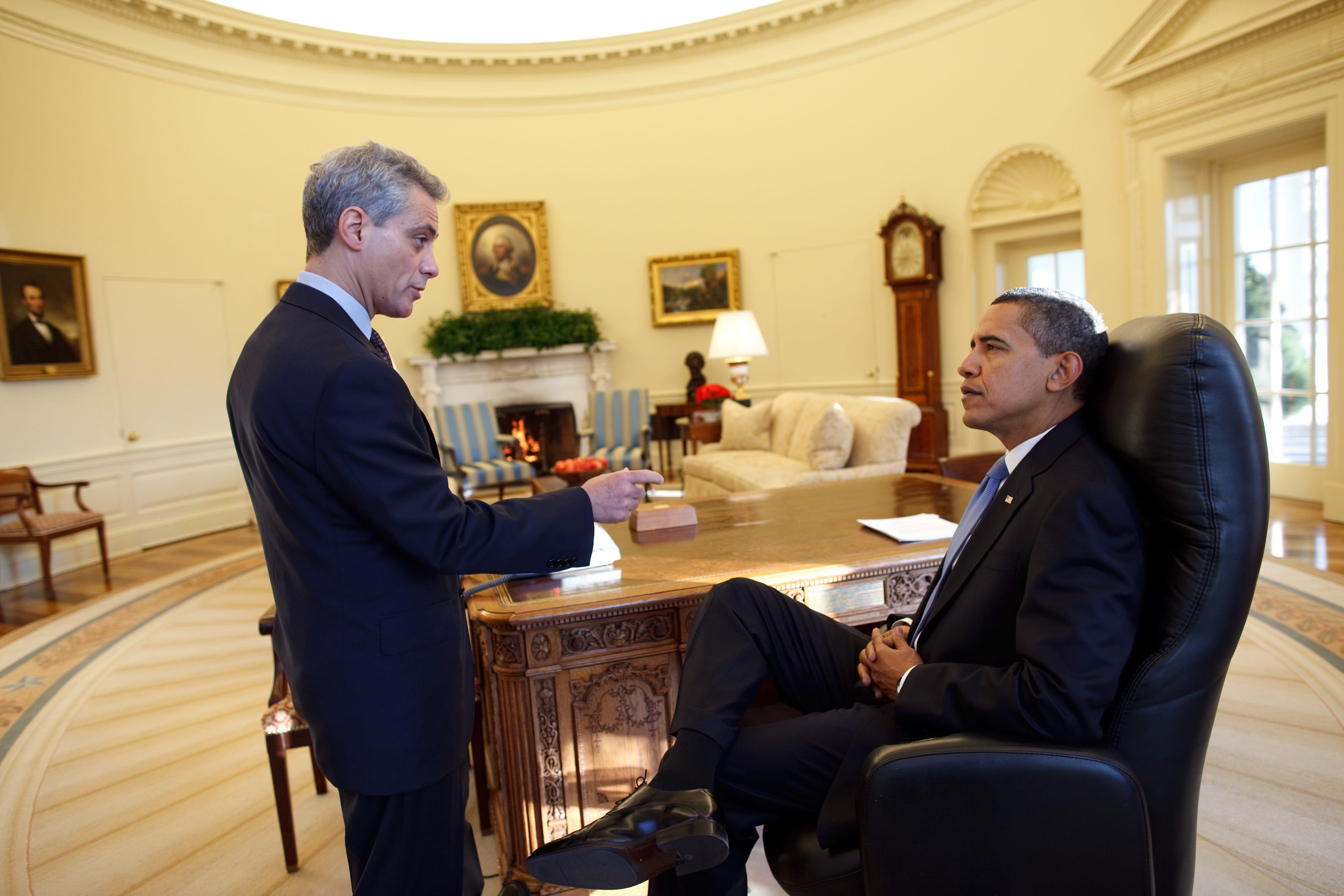
Emanuel resigned from Congress in January 2009 to become President Barack Obama’s White House chief of staff. He went on to win two races for mayor of Chicago and was later appointed U.S. Ambassador to Japan.
Emanuel, now 66, has said he is thinking of running for president in 2028. To prove he still has vitality, he completed a 113-mile bike trip across the state of New Hampshire last spring.
Winning still obsesses Emanuel. In a July interview with Jonathan Martin of Politico, Emanuel noted that Republicans and Democrats each have support from less than a third of the American public. “You need independents. Now, the other thing you need is to know how to win. And I’ve never lost.”
At a time of increased polarization, when some in his party embrace democratic socialism, Emanuel fessed up to being a “raging moderate.”
“Finding agreement across party lines does not make you a weak person,” he told Martin. “It actually makes you try to get something done.”
Though I have never been a fan of Rahm, your column makes me think I need to read The Thumpin’, for two reasons: 1) The fecklessness of the Democrats ticks me off, and if Rahm managed to get them going in the right direction, that’s nontrivial. 2) If he really does run for president in 2028, I need to know more about him.
As a Chicago native l often found Rahm as mayor irritating and lackluster. He probably could have won a 3rd term, but he just didn't seem to really like the job.
That said, I would in a heartbeat vote him in as president. I think the bigger stage would suit him, and I think he has the right mix of ethics and ruthlessness to play with the big boys, and do a good job