

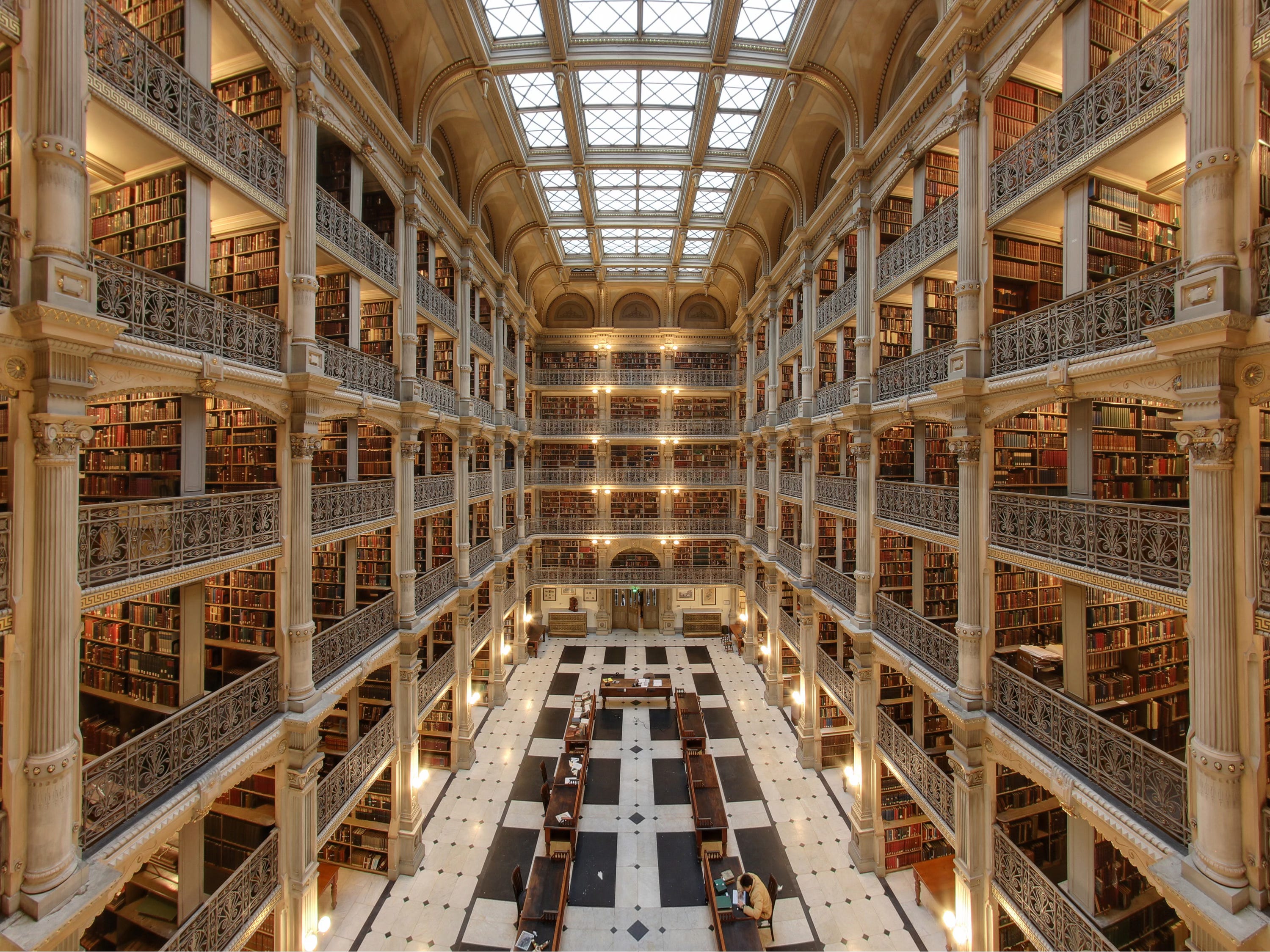
“To distract me from a troubling thought,” wrote Michel de Montaigne, “I need only resort to books.”
Imagine the French essayist seated before a fire, ensconced with his books on the third story of a tower at his chateau near Bordeaux. “I am above my gateway and have a view of my garden, my chicken-run, my backyard and most parts of my house,” he wrote in Essays, first published in 1580.
“There I can turn over the leaves of this book or that, a bit at a time without order or design. Sometimes my mind wanders off, at others I walk to and fro, noting down and dictating these whims of mine.” Montaigne read to divert his mind during a dignified but troubled retirement.
Escaping into a book is a pleasure that fortifies us today.
With that in mind, here are 15 books that I enjoyed this year. (Read to the end for some thoughts on what shows to stream.)
A voyage gone awry
When Maralyn and Maurice Bailey sailed from England on their 31-foot sloop in June, 1972, heading for New Zealand, they saw no need for a radio transmitter. But then a collision with a whale sank their ship in the Pacific, and the couple discovered how big a mistake they had made. Sophie Elmhirst tells the true story of their 118-day ordeal in A Marriage at Sea.
Under the Berlin Wall
Ryan Holiday, the author and owner of The Painted Porch bookstore in Bastrop, Texas, has an eye for a suspenseful read. His weekly Reading List newsletter drew my attention to the 2021 book Tunnel 29, Helena Merriman’s true story of people trapped in East Germany’s repressive regime who tried to tunnel their way to freedom under the Berlin Wall.
American revolutionaries
Another book touted by Ryan Holiday, Days of Rage, published in 2016, shows how an epidemic of political violence disrupted America during the early 1970s, when the Vietnam War still raged and the civil rights movement fractured. The author, Bryan Burrough, deftly contrasts several organizations of would-be revolutionaries whose tactical skills couldn’t make up for the incoherence of their strategies. Among them was Weatherman (later the Weather Underground), a group of student activists turned radicals who resorted to bombing government buildings, including the U.S. Capitol and the Pentagon. Weatherman’s bourgeois leaders lived large, on houseboats, and in townhouses and beach cottages, while they dodged the FBI’s dragnet. A second revolutionary group, the Black Liberation Army, was far deadlier, killing police officers in cold blood. A third, the bizarre Symbionese Liberation Army, gained fame for its kidnapping of heiress Patty Hearst.
Siege
In the U.K., the six-day takeover of the Iranian embassy in London by Arab separatists in the spring of 1980 was an epochal event, as Ben Macintyre writes in The Siege. “For millions it became a historical watershed, a ‘Where were you when it happened’ moment, like the JFK assassination or 9/11.” In the U.S., the event was overshadowed by the ongoing ordeal of the American diplomats seized by Iranian students in Tehran, which began Nov. 4, 1979 and lasted for 444 days. Still, Macintyre’s account of the London siege and the special forces operation that ended it is a breathtaking read.
Age of tolerance
A planned trip to Spain led me to The Ornament of the World, the late scholar Maria Rosa Menocal’s account, published in 2002, of the Islamic-controlled Andalusian empire on the Iberian peninsula. Muslims, Christians and Jews flourished in relative peace for much of a 700-year period that ended in 1492. The swirling mix of cultures left a formidable legacy of architecture, art, literature and philosophy that outlasted the expulsion of the Jews and Muslims by King Ferdinand and Queen Isabella.
The center of the world
After 1492, Spain’s Christian empire would briefly dominate the old and new worlds, a history expertly told by Robert Goodwin in his 2015 book Spain: The Center of the World 1519-1682. He charts the rise and fall of Spain’s political standing as a prelude to making sense of the culture that produced Cervantes, Velázquez and El Greco.
The Basques
The Basque region in northern Spain and southwest France delights tourists with temperate weather, flavorful cuisine and memorable sights including Frank Gehry’s Guggenheim Bilbao. Basques speak a language unlike any other. Stubbornly independent and fiercely entrepreneurial, they endured decades of persecution under the Franco regime. Mark Kurlansky’s 1999 The Basque History of the World is a joy to read even if you have no plans to visit the region.

Conservative pathfinder
Buckley, Sam Tanenhaus’s brilliantly written life of William F. Buckley, documents how the conservative author, editor and commentator helped incubate the universe of conservative thinking that brought us the Nixon, Reagan, G.H.W and G.W. Bush and Trump administrations. My take:

A Zbig deal
Edward Luce, the reliably thought-provoking Financial Times columnist, wisely picked Zbigniew Brzezinski, President Jimmy Carter’s national security adviser, as his subject for a full-length biography, Zbig. He makes a convincing case that the Polish-born “Zbig” remained true for decades to his mission of weakening the Soviet Union, proving far more successful than most grand strategists.
Last call
Daniel Okrent’s Last Call: The Rise and Fall of Prohibition, published in 2010, rewards readers with unforgettable characters, telling details and a judicious assessment of an astonishing period in American history. The unlikely movement that won passage of the 18th amendment banning alcoholic drinks was led by an assortment of true believers, savvy political operators and cranks. The many crooks and law enforcers whose careers were shaped by Prohibition add spice to Okrent’s cast of characters. A superb writer, he memorably describes one of the advocates of Prohibition, borrowing language from Thomas Hobbes, as “nasty, brutish and short.”
