

The old soldier who warned against Trump's war
Hubris and an almost-forgotten war

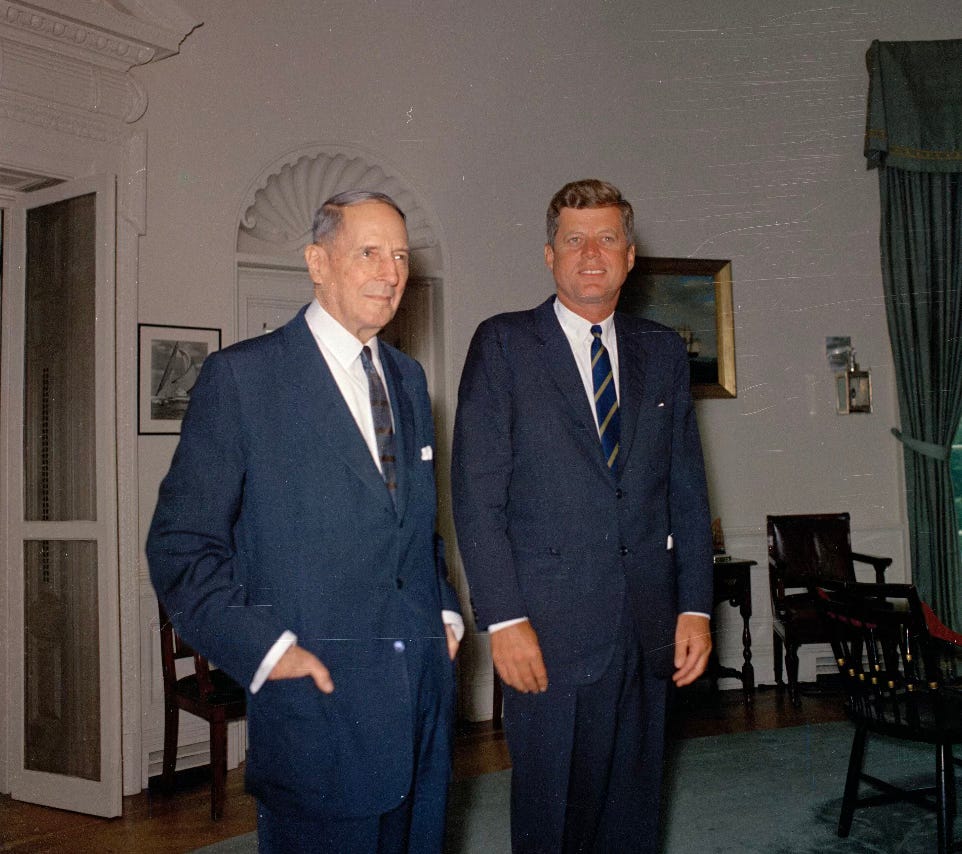
Three months after John F. Kennedy took the oath of office in 1961, the young president traveled to New York to consult the five-star general who had once commanded American forces in Asia.
At 81, Douglas MacArthur was living out retirement with his wife and son in a 10-room apartment on the 37th floor of the Waldorf Astoria Hotel.
The previous Democrat to serve in the White House, Harry S. Truman, had fired MacArthur for voicing his personal views on political matters and clashing with the president’s policies. But JFK, who served in the Pacific as MacArthur had, thought the “old soldier” would be an invaluable counselor. He particularly wanted his advice on sending U.S. troops to fight Communist guerillas in Laos and Vietnam.
There was no doubt in MacArthur’s mind about the right answer. “Anyone wanting to commit ground troops to Asia should have his head examined,” the general said. Instead the U.S. should protect its national security in the Pacific by safeguarding Japan, the Philippines and Formosa, now known as Taiwan.
After that meeting, William Manchester wrote in his brilliant biography of MacArthur American Caesar, Kennedy told aide Walt W. Rostow “that he had decided not to risk sending American ground troops to Indochina—that the ten thousand U.S. Marines who were suited up on Okinawa could stand down.”
MacArthur had seen the Japanese wage a war of attrition for eight years against the larger army of China. And he personally had to order a bitter retreat after China’s Mao Tse-Tung sent 300,000 troops over the Yalu River to support North Korea’s fight against U.S. and South Korean forces in 1950.
In 1964, when MacArthur was dying at Walter Reed Army Hospital in Washington, he repeated his advice against getting involved in a land war in Asia to JFK’s successor, President Lyndon B. Johnson. LBJ ignored that counsel, plunging ahead with a massive military commitment to the government of South Vietnam. It was a blunder that cost more than 58,000 American lives.
MacArthur’s excruciating ordeal in Korea cemented his opposition to limited wars. He had lost his battle against Truman, Secretary of State Dean Acheson and the Joint Chiefs of Staff over the proper response to China’s invasion.
The general advocated extreme measures — even suggesting to the Pentagon that he should threaten the use of atomic weapons and poison the border between China and North Korea with radioactive materials. If you go to war, he thought, you have to fight to the end and win. That was the spirit of President Franklin D. Roosevelt’s insistence on “unconditional surrender” from Germany and Japan.
“Once war is forced upon us,” MacArthur said in a speech to a joint session of Congress after Truman fired him, “there is no alternative than to apply every available means to bring it to a swift end. War’s very object is victory — not prolonged indecision.”
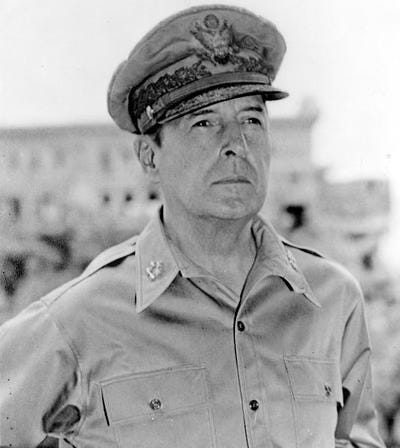
To the general, Manchester noted, limited war was like limited pregnancy.
But America’s military history in the 80 years since World War II has been a series of only limited wars, without risking nuclear Armageddon. Indeed it’s hard to imagine any sane person advocating the use of nuclear weapons given their potential to destroy life on the planet. So while President Donald Trump has mused about requiring “unconditional surrender” from Iran’s theocratic regime, there appears little chance he can succeed without putting U.S. troops at risk in a ground invasion.
Unlimited war
World War II really was an unlimited war. Japan launched it in the Pacific with a surprise attack on the American naval base at Pearl Harbor on December 7, 1941.
It took years of costly battles for the U.S. to gain the upper hand. Seeking to force the Japanese to surrender, the U.S. dropped a devastating new weapon — atomic bombs — on the cities of Hiroshima and Nagasaki in August, 1945. The island nation lost hundreds of thousands of people in those attacks, and its total losses in the war approached two million. Japan lost 81 percent of the territory it controlled, Manchester noted, adding:
Nippon’s merchant fleet was rusting on the floors of ten Oriental seas. Hiroshima and Nagasaki had been reduced to barren pits of glazed rubble, and virtually all other major cities, including the capital, were ghastly wastelands.
In 1945, Truman named MacArthur the viceroy heading the Allied occupation of Japan. The general wisely saw that the war had devastated the spirit of the Japanese: “It was the collapse of a faith, it was the disintegration of everything they believed in and lived by and fought for. It left a complete vacuum, morally, mentally and physically.”
Into that vacuum, MacArthur instilled a belief in democracy and civil liberties. He saw his role as leading “the world’s greatest laboratory for an experiment in the liberation of a people from totalitarian military rule and for the liberalization of government from within.”
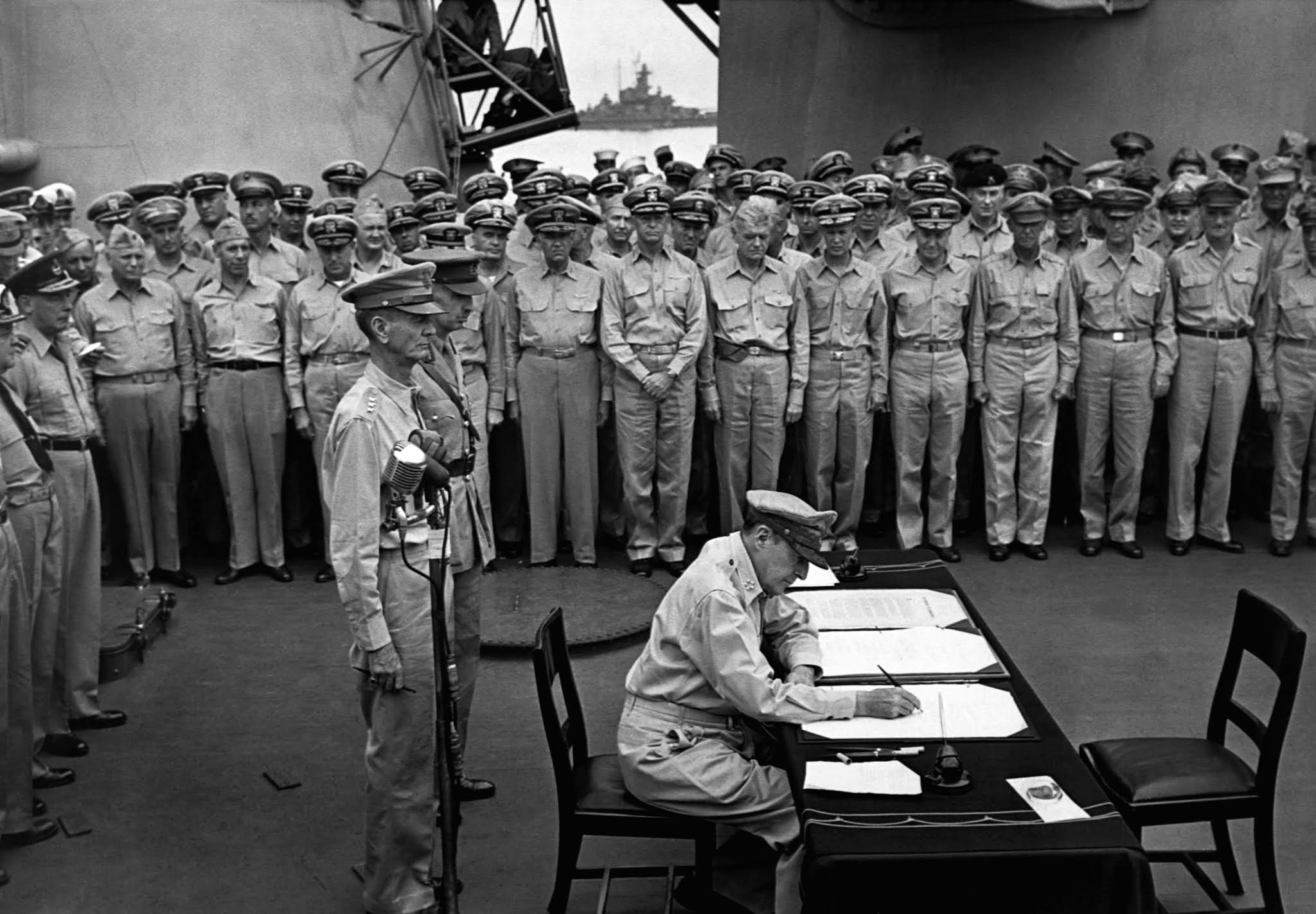
When Truman fired MacArthur in 1950, Japan mourned. Top Japanese officials wrote to MacArthur “of their personal anguish, and Hirohito appeared at the embassy, the first time an emperor had called on a foreigner with no official standing,” Manchester wrote. “Taking MacArthur’s hand in both of his, he told him of his own profound distress.” MacArthur would be leaving Japan with “the good wishes of eighty-three million Japanese people,” wrote the Japan Times.
The rebuilding of Japan after World War II was indeed regime change — not the substitution of one leader for another, as occurred in Venezuela after the U.S. raid that captured Nicolás Maduro in January — but a thorough upheaval of the society and government. It is the kind of regime change Trump has said he is seeking in Iran, which has been ruled by mullahs since 1979. But so far there’s no sign of a clear plan to achieve it.
MacArthur and Trump
Douglas MacArthur “appeared to need enemies the way other men need friends,” wrote William Manchester, “and his conduct assured that he would always have plenty of them.”
A “yearning for adulation was his great flaw. He had others, notably mendacity and overoptimism…. But it was his manifest self-regard, his complete lack of humility, which lay like a deep fissure at his very core. In the end it split wide open and destroyed him.”
The people around MacArthur “catered to his peacockery, genuflected to his viceregal whims, and shared his conviction that plotters were bent upon stabbing him in the back.” It’s difficult to read those words without thinking of President Donald Trump, who has praised MacArthur.
For all their similarities of personality, though, there is one enormous difference — MacArthur’s military accomplishments: “Unquestionably he was the most gifted man-at-arms this nation has produced. He was also extraordinarily brave. His twenty-two medals— thirteen of them for heroism—probably exceeded those of any other figure in American history,” according to Manchester. Add to that MacArthur’s knowledge of history and current events and you had a leader who had done his homework, someone superbly prepared for command.
Yet for all of that, a six-week stretch in 1950 demonstrated his vulnerability, in the war in Korea that would lead to his downfall. There may be no better example in U.S. history of the perils of military strategy and the danger of thinking, as Trump asserts regarding the Iran war, that your side is invincible.
The U.S. and Russia had divided the Korean peninsula at the 38th parallel, with the Communist Kim Il Sung and the U.S.-supported Syngman Rhee as competing despots each intent on conquering the whole of Korea.
In 1949, the U.S. withdrew its combat troops from South Korea. In January, 1950, Secretary of State Dean Acheson gave a speech that signaled to the Russian, Chinese and North Korean governments that the U.S. didn’t consider Korea part of the vital interests it would defend in Asia.
But when 90,000 North Korean troops charged over the line into South Korea in June, the Truman administration decided quickly that preserving that nation was a vital American interest after all. Politically, the Democratic administration believed it couldn’t withstand the blame it would get from Republicans and voters for ceding another nation to Communist aggression after the “loss” of China to Mao’s rebels.
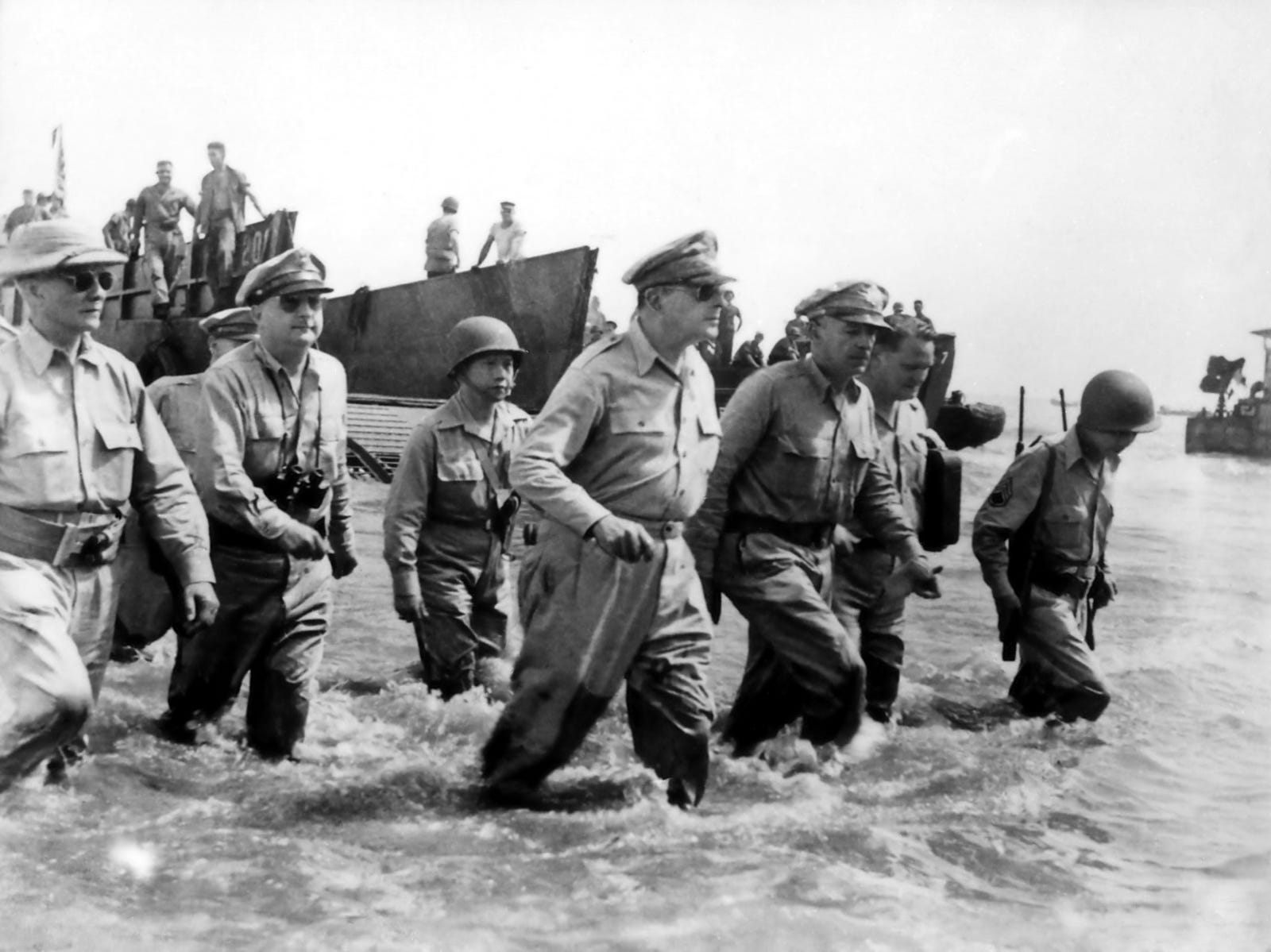
It also installed MacArthur as commander of the United Nations “police action” against North Korea. MacArthur, who continued to preside over the reconstruction of Japan, had control of the military assets nearest Korea, so his appointment to put out the fire in his backyard seemed natural. But it also entailed buying into his particular conception of war and potentially emboldening him to defy the Joint Chiefs and Truman himself. As David Halberstam wrote in The Coldest Winter, the only orders MacArthur respected were his own.
At the outset, MacArthur faced a desperate situation in Korea. Kim Il Sung’s forces captured the South Korean capital of Seoul early in the war. The troops MacArthur sent to Korea from his command in Japan were ill-equipped, ill-trained and psychologically ill-prepared to battle the North Koreans in a country they could barely find on a map. But the U.S. reinforced its troops and reversed the momentum.
A stroke of genius
The key move was MacArthur’s audacious amphibious landing behind the North Korean lines. His plan for a surprise assault on Inchon, a port on the west coast of the Korean Peninsula, shocked the U.S. naval officer who would have to carry it out.
Admiral James H. Doyle “was dumbfounded,” Manchester observed. “He knew that Inchon had no beaches, only piers and seawalls. The attack would have to be launched in the heart of the city. The waters approaching it could easily be mined; possibly they already were. Currents there ran as high as eight knots. In any one of a hundred turns, a sunken or disabled ship could block the little bay, which was interlaced with moles and breakwaters.”
The port’s enormous tidal range of 32 feet risked stranding the American landing craft in “wide, oozing, gray mud flats” unless the operation could be carried out on dates when the high tides would be exceptionally elevated.
“Every flag and general officer” in MacArthur’s Tokyo headquarters “tried to talk him out of it,” according to Manchester. He ignored them. The very unlikely nature of an Inchon landing would contribute to the surprise it would inflict on the North Koreans. And it worked spectacularly well. Manchester wrote:
The final reckoning would show that at Inchon MacArthur had defeated between 30,000 and 40,000 In Min Gun [North Korean army] defenders at a cost of 536 dead, 2,550 wounded, and 65 missing. [Admiral] Halsey called it “the most masterly and audacious strategic course in all history.”
The consequences were stunning. A little more than a month after the September 15, 1950 Inchon landing, UN forces conquered North Korea’s capital Pyongyang.
American troops were told to pack their dress uniforms for an eventual victory parade in Tokyo. They confidently expected to be home by Christmas. Flush with victory and mindful of the war aim of reuniting Korea, MacArthur ordered his troops to continue north toward the Yalu River, the border with China.
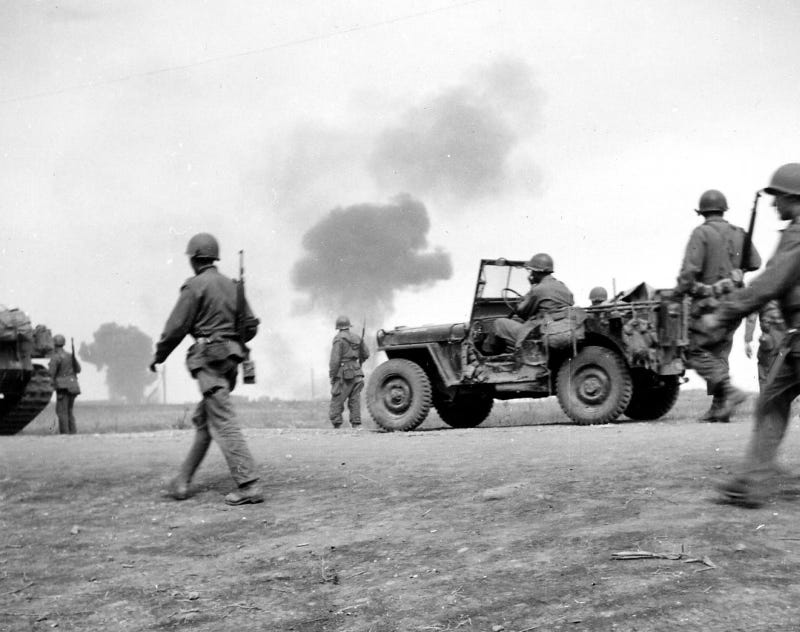
What he discovered later is that on the day Pyongyang was captured, China began sending troops across the Yalu. Initially, MacArthur and his staff rejected reports of Chinese intervention, dismissing the isolated Chinese who were taken prisoner as “volunteers." MacArthur. It was “one of the worst military intelligence blunders in U.S. Army history,” according to historian Matthew J. Seelinger:
Ignoring reports of contact with CCF [Chinese Communist Forces] troops, MacArthur ordered the Eighth Army and X Corps to push on to the Yalu.
On the night of 25 November, one day after Eighth Army began its offensive, the CCF struck Eighth Army with massive numbers of troops. Thousands of Chinese soldiers, armed with burp guns and grenades, with bugles blaring, swarmed the American positions. Several American units were overrun and destroyed. The CCF onslaught took MacArthur and the U.N. forces completely by surprise and almost instantly changed the tide of the war. Soon, Eighth Army was in full headlong retreat southward.
Outnumbered and suffering from the extreme cold, American troops took heavy losses as they tried to escape. Once again, the tide of the war reversed. The North Koreans recaptured their capital and for the second time, occupied Seoul. Ultimately, the U.N. forces, under the command of Gen. Matthew B. Ridgway retook enough territory to restore the 38th parallel as the border between North and South Korea.
Fighting on
MacArthur refused to accept blame for the disaster.
Brave, brilliant, and majestic, he was a colossus bestriding Korea until the nemesis of his hubris overtook him. He simply could not bear to end his career in checkmate. It would, in his view, be a betrayal of his mission, an acknowledgment that MacArthur was imperfect. Politics had always been his Eve, a lure and a threat, fascinating but ill-boding. Now, as he saw it, his political enemies — and anyone who barred his way was an adversary — were thwarting his last crusade. Believing that Washington was denying him the tools to finish his job, that he had been relegated to what he called a “No-Man’s Land of indecision,” scornful of what he regarded as the Joint Chiefs’ loss of a will to win, he grappled through that winter holding the Chinese at bay while trying to persuade his superiors to see things his way.
The Democrats had lost seats in the House and Senate in the November, 1950 midterms, an election in which foreign policy was a key issue. Many leading Republicans placed their faith in MacArthur, seeing him as the heroic voice of resistance to President Truman’s timid policies. MacArthur reciprocated, and his encouragement of GOP opposition to Truman virtually dared the president to fire him.
MacArthur’s firing was an emotional catharsis for America. Millions poured into the streets to welcome him home in city after city and to blast the president. Tens of thousands of letters and telegrams told Truman and his party just how unpopular the firing of MacArthur had been.
Yet, in time, there wasn’t a sizable constituency for unlimited war against China and Russia over Korea. And MacArthur proved unable to convert his popularity into real political power — or the 1952 Republican presidential nomination, which instead went to his former aide Gen. Dwight Eisenhower.
The Korean War dragged on until an armistice was reached in 1953. More than 36,000 Americans died; The overall death toll including civilians on both sides, exceeded three million.
The Korean War was utterly unlike the unifying national effort World War II had been. “It was simply a puzzling, gray, very distant conflict,” wrote David Halberstam, “a war that went on and on and on, seemingly without hope or resolution, about which most Americans, save the men who fought there and their immediate families, preferred to know as little as possible.”
Viewed generations later, the Korean War birthed two very different regimes — a hereditary dictatorship that still rules the north and a vibrant economy and democracy in the south.
Yet the initially inconclusive result of the war was a template for so many of the battles America has fought in the 73 years since it ended — in Vietnam, Iraq and Afghanistan. President Trump has already claimed victory in his war against Iran, but the outcome appears on course to be far more mixed, given Iran’s ability to inflict economic pain by paralyzing the movement of oil tankers through the Strait of Hormuz and the continued existence of the theocratic regime.
When MacArthur addressed Congress after his firing, he looked back to the start of his 52 years in the military. “The world has turned over many times since I took the oath on the Plain at West Point, and the hopes and dreams have long since vanished. But I still remember the refrain of one of the most popular barrack ballads of that day, which proclaimed, most proudly, that ‘Old soldiers never die. They just fade away. And like the soldier of the ballad, I now close my military career and just fade away —an old soldier who tried to do his duty as God gave him the light to see that duty.”
Truman thought the general’s speech was “a hundred percent bullshit,” Manchester noted. But the nation was moved by it.
When the crowds stopped cheering MacArthur in the coming years, he began to rethink his enthusiasm for unlimited war. “His revulsion against war had grown,” wrote Manchester. “He decided that Eisenhower and Dulles had been right in rejecting his proposed ultimatum to Stalin; atomic bombs, he felt, should never be used.” The ability of atomic weapons to eradicate life “destroyed the possibility of war being a medium of practical settlement of international differences,” MacArthur wrote.
It wasn’t only old soldiers who faded away, but the old way of war as well.
Timely piece about an overlooked moment when the world stared at the abyss. I happen to be reading HW Brands' book The General Vs. The President about MacArthur and Truman on the brink of nuclear war. I might have to read that MacArthur biography. MacArthur was a deeply ambivalent figure, a great man and an impossibly arrogant poser. Anyone with such massive responsibility who doesn't listen, no matter how experienced, knowledgeable and smart they are, becomes dangerous. The danger increases exponentially if they're none of those three things and aggressively ignorant besides, the essence of our current dilemma. Great read.