
What Lincoln would tell Trump
About the president's deranged Rob Reiner post
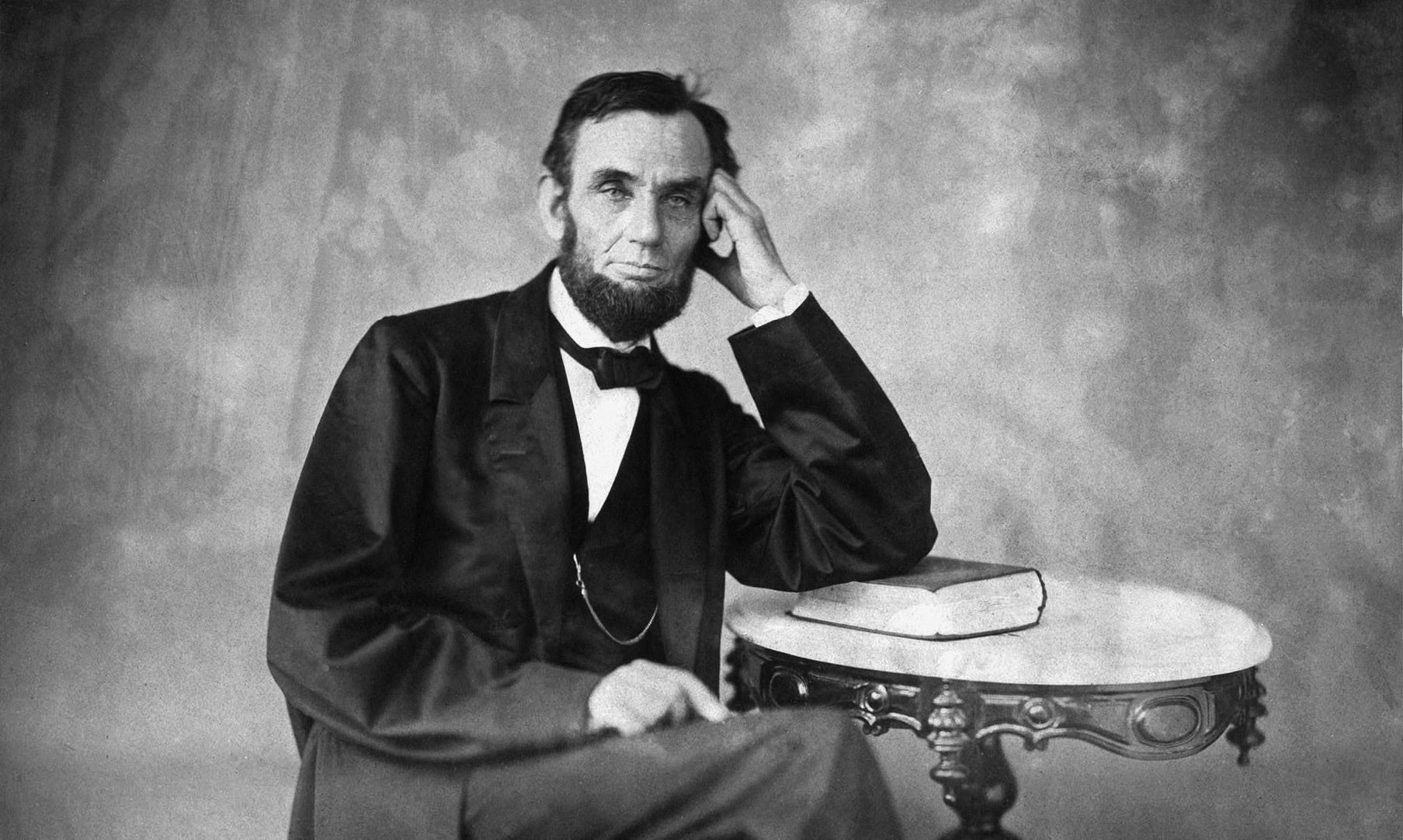
At dusk on November 18, 1863, President Abraham Lincoln arrived by train at Gettysburg, the site of the bloodiest battle of the Civil War. Huge crowds had gathered at the home of lawyer David Wills, who was hosting the president. Lincoln told the Pennsylvanians that he had no speech to make that night.
“In my position it is somewhat important that I should not say any foolish things.”
Someone cried out, “If you can help it.”
Lincoln replied, to laughter, “It very often happens that the only way to help it is to say nothing at all. Believing that is my present condition this evening, I must beg of you to excuse me from addressing you further.”
The next day, on the battlefield where more than 50,000 soldiers had been killed or wounded four months earlier, Lincoln did have a speech, a mere 272 words commemorating the battle and dedicating the cemetery.
“We cannot dedicate — we cannot consecrate — we cannot hallow — this ground,” Lincoln said. “The brave men, living and dead, who struggled here, have consecrated it, far above our poor power to add or detract. The world will little note, nor long remember what we say here, but it can never forget what they did here.”
Of course, the world long remembered what Lincoln said at Gettysburg. But what also stands out now in the 16th president’s approach to public speaking was his reticence, his agonizing over what to say and when to say it — and especially when to stay silent.
We have a president who blurts out whatever seems to come to mind, including his awful — and widely condemned — Truth Social post about the death of political foe Rob Reiner, attempting to make a horrific crime and family tragedy all about himself and “Trump Derangement Syndrome.”
Stomping on grief
“Good people and good nations do not stomp on the grief of others,” Bret Stephens wrote in the New York Times. “Politics is meant to end at the graveside. That’s not just some social nicety. It’s a foundational taboo that any civilized society must enforce to prevent transient personal differences from becoming generational blood feuds.”
Comparing Trump to former presidents sometimes seems to miss the point, given how far out of range he is to almost everyone else. But it is instructive to look back at how much things have changed.
Every president from Jefferson to Taft delivered the State of the Union message in writing, rather than deliver it to a joint session of Congress.
The U.S. Senate met only behind closed doors for the first five years of its existence.
Presidents including Lincoln went out of their way to avoid commenting on issues.
The U.S. government in the 70 years after the ratification of the Constitution bore as much resemblance to today’s Washington as a horse-drawn carriage does to a Boeing 787.
One of Lincoln’ speeches, given in Pittsburgh on February 15, 1861, crystallizes the difference between then and now. The nation was facing its biggest test: Seven states had seceded from the Union and formed the Confederate States of America.
As Jeffrey K. Tulis wrote in his book The Rhetorical Presidency, Lincoln told the audience:
In every crowd through which I have passed of late some allusion has been made to the present distracted condition of the country. It is naturally expected that I should say something upon this subject, but to touch upon it at all would involve an elaborate discussion of a great many questions and circumstances, would require more time than I can at present command, and would perhaps, unnecessarily commit me upon matters which have not yet fully developed themselves.
A reporter covering the speech noted that Lincoln’s remarks were met with immense cheering, and with cries of “good!” and “that’s right!”
As Tulis noted in his 1987 book, “Lincoln refused to speak about an impending civil war and was applauded. It is hard to imagine a crowd cheering any instance of ‘stonewalling’ today.”
Tulis argued that presidents who chose to keep their silence were very much in tune with the vision of the nation’s founders, who worried about presidents pandering to mobs and feared that a demagogue could use the powers of office to upset the Constitution’s safeguards against monarchical rule.
‘Scandalous harangues’
The first president to break with the tradition of reticence was Lincoln’s successor, President Andrew Johnson. He wound up getting impeached, in part for his abusive rhetoric. (A plaque in the Trump White House’s “Presidential Walk of Fame” notes that for Johnson, “Abraham Lincoln was a very hard act to follow.”)
Johnson apparently didn’t learn any lessons from Lincoln; he never avoided saying foolish things.
Tulis wrote:
In the typical speech, Johnson would begin by disclaiming an intention to speak, proceed to invoke the spirits of Washington and Jackson, claim his own devotion to the principles of Union, deny that he was a traitor as others alleged, attack some part of the audience (depending on the kinds of heckles he received), defend his use of the veto, attack Congress as a body and single out particular congressmen (occasionally denouncing them as traitors for not supporting his policies), compare himself to Christ and offer himself as a martyr, and finally conclude by declaring his closeness to the people and appealing for their support.
It wasn’t exactly a Trump rally, but there’s a family resemblance.
Article 10 of the impeachment charges brought against Andrew Johnson said that he made “with a loud voice, certain intemperate, inflammatory and scandalous harangues” and uttered “loud threats and bitter menaces, as well against Congress as the laws of the United States duly enacted thereby, amid the cries, jeers and laughter of the multitudes then assembled in hearing…”
At the end of Johnson’s trial — which also involved issues other than his intemperate speeches — 35 senators voted to remove him from office, one short of the needed two-thirds majority of the Senate.
Bully pulpit
Thirty-seven years after Johnson’s impeachment, President Theodore Roosevelt began to test the limits of presidential speechmaking. Fueled by moral outrage over the gap between the rich and the poor, Roosevelt traveled the country to rail against opponents of reform, particularly in his campaign to curb the power of railroad companies.
“This government was formed with as its basic idea the principle of treating each man on his worth as a man,” Roosevelt said in Richmond, Va., “of paying no heed to whether he was rich or poor, no heed to his creed or his social standing, but only to the way in which he performed his duty to himself, to his neighbor, to the state. From this principle we can not afford to vary by so much as a hand’s breadth.”
As Tulis wrote, Roosevelt didn’t shrink from a “rhetoric of alarm and exaggeration” and even compared opponents of reform to Robespierre and other murderous leaders of the French Revolution.
Roosevelt was realizing the hidden power he possessed. In her book The Bully Pulpit, Doris Kearns Goodwin sought to explain how Roosevelt had achieved political and economic reform over the objections of a Congress “long wedded to the reigning concept of laissez-faire — a government interfering as little as possible in the economic and social life of the people.”
Goodwin noted, “Early in Roosevelt’s tenure, Lyman Abbott, editor of the Outlook, joined a small group of friends in the president’s library to offer advice and criticism on a draft of his upcoming message to Congress. ‘He had just finished a paragraph of a distinctly ethical character,’ Abbott recalled, ‘when he suddenly stopped, swung round in his swivel chair and said, “I suppose my critics will call that preaching but I have got such a bully pulpit.” (Roosevelt used the word “bully” to mean “excellent” or “first rate.”)
As Goodwin added, “from this bully pulpit Roosevelt would focus the charge of a national movement to apply an ethical framework through government action to the untrammeled growth of modern America.”
TR called journalists “by their first names, invited them to meals, took questions during his midday shave, welcomed their company at day’s end while he signed correspondence and designated for the first time a special room for them in The West Wing. He brought them aboard his private railroad car during his regular swings around the country.”
Roosevelt’s successor, William Howard Taft, lacked that rapport with the press and the ability to communicate easily with the public.
Wilson and beyond
When Woodrow Wilson was elected in 1912, defeating Taft and Roosevelt, the nation had a professor of government in the White House for the first time.
Wilson arrived with strong views about the choices the framers had made; to him, as Tulis pointed out, the Constitution set up a Newtonian system of opposing forces — checks and balances — when American government was really a Darwinian struggle for power between Congress and the president.
He resolved to use his voice to empower the presidency, giving his State of the Union message in a speech before Congress and, after America’s entry into the first world war, setting up a government propaganda office.
Post Wilson, presidents have been expected to speak regularly to the nation and constantly share their views in newspapers, radio, television and eventually, social media.
A president who fails to do so risks losing control of the agenda to other ambitious Washington politicians. Arguably, one of the failings of President Joe Biden’s administration was his White House’s reluctance to engage regularly with mainstream media, particularly in unscripted ways. In the election year of 2024, Biden passed up a huge audience by choosing to skip the traditional pre-Super Bowl interview for the second time in a row.
We now have the opposite problem: a president who doesn’t know when to keep his thoughts to himself.
In 2017, when Trump was serving the first year of his first term in the White House, Dartmouth Professor Russell Muirhead acutely perceived the fundamental challenge Trump would pose through his use of social media.
In an introduction to a new edition of the book by Jeffrey Tulis, Moorhead wrote of how Trump was then speaking directly to citizens via Twitter, bypassing the traditional media: “He has relaxed and abandoned the formalities and norms of propriety that heretofore constrained presidential talk; and he stands poised to normalize demagoguery in the presidency more fully than any president before.”
Trump gives “voice to the frustrations, resentments, and enmities that society, with its codes of politeness, would repress,” observed Muirhead.
Trump’s attack on Rob Reiner is only the latest in a long line of such outrages from a president who mocked war hero Sen. John McCain and the badly injured Paul Pelosi, husband of former Speaker Nancy Pelosi.
Muirhead posed this question eight years ago:
“Will Trump, with his brilliant rhetorical instincts, use the powers that the rhetorical presidency puts at his command to make constitutional government obsolete by rendering the people so deeply divided they cannot again come together?”
“Or will the founders succeed in spite of all: will the Constitution elevate and dignify this president, as it has others before him, and inspire him to bring people together in a large and lasting way?”
We know the answer now.


Excellent.
We sure do. Beyond the changes in public communication, apart from the different media presidents have used to communicate with the people, and whether they aim to shape the people’s understanding of reality or to reflect their roiling prejudices, I can’t help but ponder the supreme importance of what used to be called character. In this case the character of the wizard behind the media curtain or screen. Sherman famously said about Lincoln that he possessed greatness combined with goodness like no other man he had met. Our current president has a zero on at least one side of that duel ledger, which puts him, at best, at zero. At worst, we’ll have to see how deep he might plunge into negative territory and how many of the rest of us he brings along with him. Nicely done.