

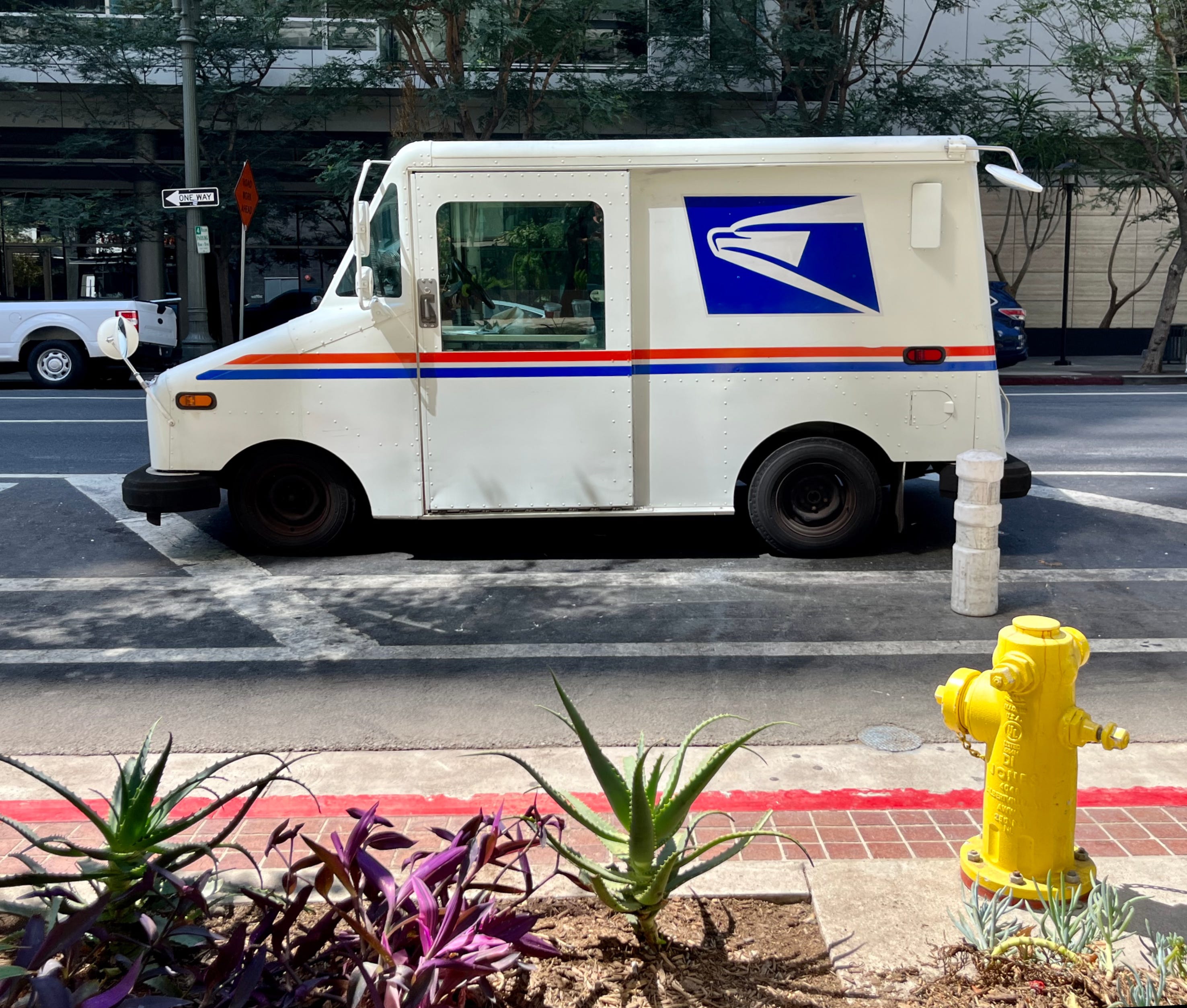
On September 6, U.S. Solicitor General D. John Sauer likened the Postal Service’s stringent new rule on voting by mail to the requirements for mailing cremated remains and replica explosives.
The USPS, he argued in a brief to the Supreme Court, was just exercising its right to make “modest processing rules for mailable but sensitive materials.”
Ashes from cremations have to be mailed in special boxes via Priority Mail Express and have to be trackable by barcode, Sauer noted. Replica explosives have to be mailed from retail counters via Registered Mail.
But to election officials in 23 states and the District of Columbia, the Postal Service’s new ballot rules were not so routine — or innocuous. They threatened to throw November’s midterm elections into chaos, raising the prospect that tens of millions of voters could be silenced. Nearly a third of Americans vote by mail.
On September 14, the Supreme Court blocked the new rule, with only Justices Samuel Alito and Clarence Thomas dissenting. Justice Brett Kavanaugh concurred in the majority’s ruling, saying that “applying the rule in the 2026 elections would be arbitrary and capricious in violation of the Administrative Procedure Act because state and local election officials do not have sufficient time to reasonably implement the rule before the elections.”
But he also observed that “there is at least a fair prospect that the final rule falls within the Postal Service’s statutory authority.”
Those words were one of many signs that the assault on voting by mail will continue into the 2028 presidential election campaign. President Donald Trump consistently assails the practice even though he votes by mail. “Mail-in voting means mail-in cheating,” he said in March.
Lincoln’s fear
Controversy over absentee ballots stretches back to the Civil War. President Abraham Lincoln, facing an anti-war challenge in the 1864 election from Major General George B. McClellan, feared he was going to lose. On August 23, he wrote to his cabinet, “it seems exceedingly probable that this Administration will not be re-elected.” But in early September, Gen. William T. Sherman conquered Atlanta, bolstering the North’s chances of victory.
Another factor helping Lincoln, as Meilan Solly wrote for Smithsonian magazine, was the passage of laws by 19 Northern states to allow soldiers to cast absentee ballots. About 150,000 Union soldiers did so, and 78% voted for Lincoln.
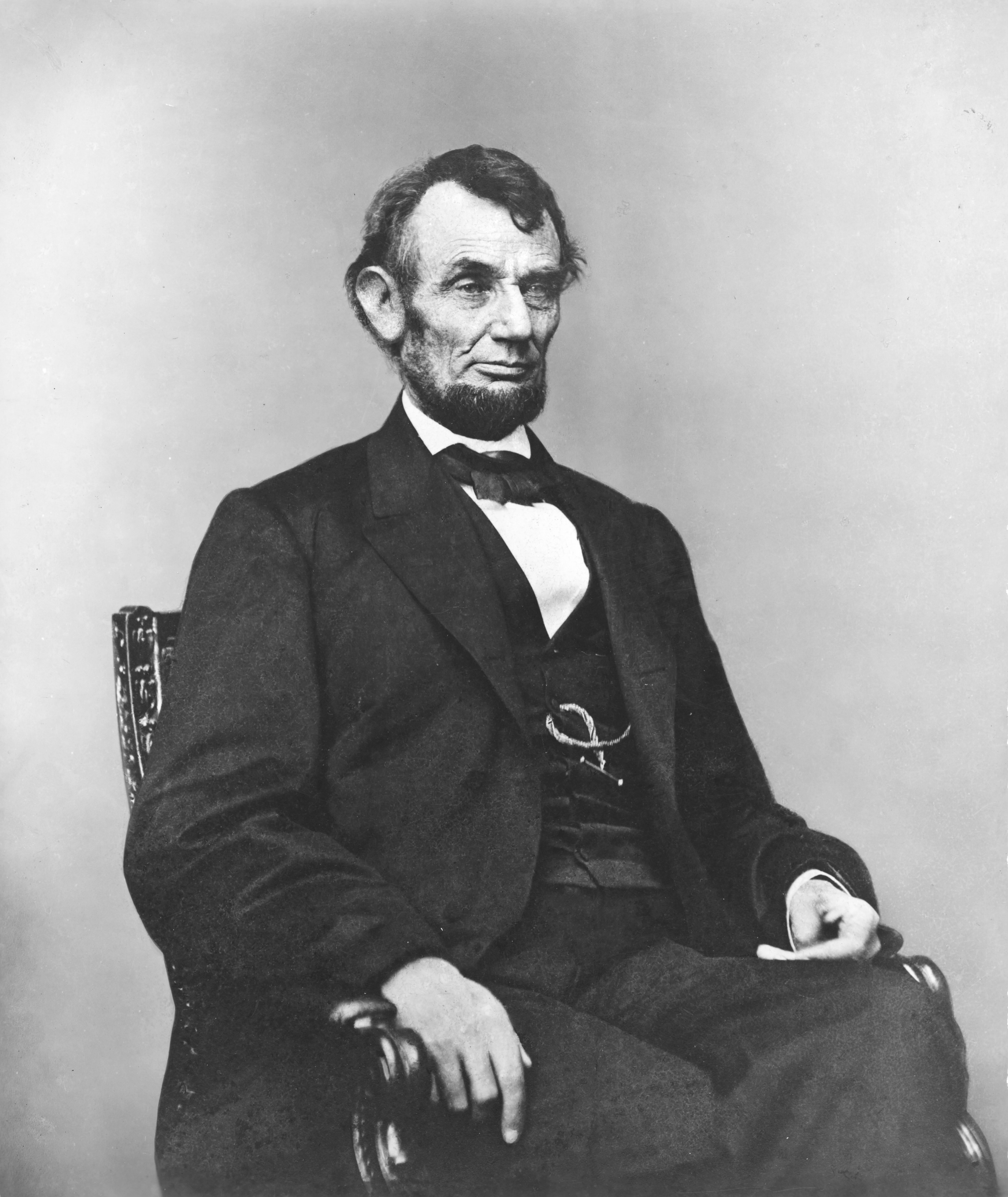
Lincoln’s War Department found other ways to support his re-election bid. Historian Jonathan W. White wrote for the New York Times in 2014:
Officers throughout the Union armies granted furloughs for Republican soldiers to go home to vote, while Democrats were kept in the field. A Pennsylvania election commissioner reported that “Democrats were threatened to be sent to the front if they voted,” while an Illinois soldier noted that his regiment was polled “to see how many would vote for Lincoln if they got a chance to go home.”
White quoted a New Jersey soldier as writing: “I suppose I might have gotten home if I would have said I should vote for A[be]. But never. I would sooner stay here for another year than to come home and vote for him.” But that was a minority opinion.
Lincoln beat McClellan decisively, winning 55% of the popular vote and 91% of the electoral college.
During World War II, absentee ballots enabled millions of U.S. soldiers to cast their votes. Mail voting also proved its utility during the Covid pandemic. According to Census data, 43% of Americans voted by mail in 2020, compared to 21% in 2016. The states that made the greatest use of mail ballots and early voting showed the highest increases in turnout in 2020, a Census statistician noted.
Voting by mail is convenient and popular, especially among Democrats. Under Trump’s assault against the practice, Republicans have grown wary. A 2025 Pew poll found that 58% of Americans approve of voting by mail. The partisan divide is sharp: 83% of Democrats favor it, while only 32% of Republicans do.
In September 2020, Trump criticized a Nevada law requiring that mail ballots be sent to active registered voters, saying “We’re in front of a court and, hopefully, the court’s going to rule because this is the greatest scam in the history of presidential politics.” After he lost the election, Trump continued to rail against mail ballots.
Executive order
In March of this year, Trump issued Executive Order 14399: “Ensuring Citizenship Verification and Integrity in Federal Elections.”
It called on the Secretary of Homeland Security to compile a list to be given to each state of the voters confirmed to be U.S. citizens eligible to vote. It ordered the Attorney General to prioritize the investigation and prosecution of state election officials who provide ballots to people ineligible to vote in a federal election. And it directed the Postmaster General to set new rules for mail ballots.
The Postal Service’s regulation set design standards for state ballot envelopes and return envelopes, required state officials to submit those designs for USPS approval and directed that states or local officials must enter each voter’s information into a portal run by the postal service.
Yet the rule wouldn’t have really accomplished anything, even though it posed a daunting burden on election officials as they prepared for the midterms.
“This is supposedly an antifraud provision,” wrote election law expert Rick Hasen, “but it is hard to see how these procedures will catch any fraud — the government already has been on a major hunt for noncitizen voting and other forms of voter fraud and found virtually nothing, and certainly no organized efforts to steal elections.”
Writing before the Supreme Court blocked the USPS rule, Stephen Richer, a former Arizona elections official, noted, “the USPS will not do anything to assess the validity of the mail voters on the submitted list. It won’t check to see if the addressees are real people. It won’t check to see if they’re U.S. citizens, or if they really live at that address, or if the recipient is registered to vote in multiple states, or even if they’re registered in two houses on the same street.”
Two judges
Two federal judges temporarily blocked the Postal Service rule before the Supreme Court ruled. One, U.S. District Judge Indira Talwani, nominated to the bench by President Barack Obama, called it “a likely unconstitutional regulation for which compliance is practically impossible as to the 2026 midterm elections, now little more than two months away.”
The second, District Court Judge Carl J. Nichols, was nominated in June 2019 by President Trump. He rejected the idea that the Postal Service’s regulation of mail ballots was analogous to the rules for handling cremated remains and replica explosives.
“Those regulations concern how particular items are packaged, shipped, and tracked while moving through the postal system,” Nichols wrote. By contrast, “the maintenance of absentee and mail-in voter information through the Federal Ballot Mail Portal and the vetting of Outbound Federal Ballot Mail for compliance with the entire regulatory regime” isn’t about “steps that aid in the transmission of mail.”
Nichols observed:
Nothing in the Postal Reorganization Act authorizes the Postal Service to impose new election procedures on state election officials, to create a data collection system for mail-in and absentee voters, or to refuse the transmission of lawful mail because it fails to meet these data collection requirements.
Thanks to the plaintiffs in the two cases, the judges’ rulings and the Supreme Court’s decision, voters will remain free to receive and submit mail ballots in November’s election.
Yet the Trump administration’s efforts to restrict voting will no doubt continue.