
America is at war with a country it doesn't understand
Seven decades of wishful thinking on Iran
On August 18, 1953, the Shah of Iran, Mohammad Reza Pahlavi, and Queen Soraya stepped off a commercial plane at Rome’s Ciampino airport.
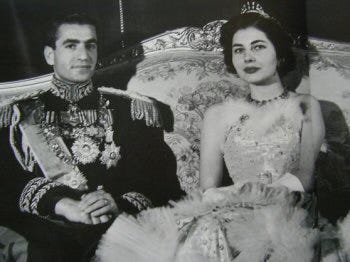
The shah, wearing sunglasses and a light gray suit, “was pale and grave and had a two-day growth of beard on his chin,” The New York Times reported. His wife, “in a brown silk dress and sunglasses, was disheveled and seemed on the verge of tears.” They hadn’t slept in 48 hours, though the Times added archly that they were “both out sightseeing within two hours of reaching their hotel.”
The royal couple’s trauma had a simple explanation: the apparent failure of an American- and British-backed coup to oust Iran’s Prime Minister Mohammad Mossadegh and place absolute power in the hands of the shah.
Except for one thing.
By the time the shah and his wife sat down to dine that day at the Excelsior Hotel, word reached them the coup’s plotters had actually succeeded in toppling Mossadegh. The shah was free to go home — and to rule. In his book King of Kings, Scott Anderson captures the awkwardness of the moment. “It was a somewhat sheepish King of Kings who returned to Tehran three days later to reassume the Peacock Throne,” Anderson wrote.
Even then, some American officials were wondering if they were right to place their faith in the shah.
The 1953 coup was only the beginning of a series of disastrous mistakes the U.S. would make in dealing with Iran over the next 73 years. Shah Mohammad Reza Pahlavi would make another aerial escape from Tehran, in 1978, this time for good. And his replacement would be far worse.

47 years
In his Wednesday evening televised speech, President Donald Trump was right about at least one thing: the U.S. has been at war with Iran for nearly half a century.
“This fanatical regime has been chanting death to America, death to Israel, for 47 years,” and as Trump pointed out, tried to bring those aims to fruition with terrorist attacks against both countries. The prospect of Iran developing nuclear weapons is nightmarish, though it’s not clear if the ongoing war will eliminate that threat.
What Trump didn’t say, and perhaps doesn’t know, is that the U.S. has an even longer track record of failing to understand Iran and at crucial moments, making catastrophically bad choices. American officials enabled the shah’s one-man rule — but when it began to appear that he was doomed in 1978, they minimized the risk that Ayatollah Ruhollah Khomeini posed to freedom and to the security of western nations.
In King of Kings, Anderson expertly marshals the evidence of American blindness on Iran stretching back to the early days of Pahlavi’s regime. The catalogue of U.S. blunders ranges from the comical to the nearly criminal negligence of American officials.
Iran’s history
Iran traces its history back more than 2500 years to Cyrus the Great. The empire created by Cyrus and his successor Darius, “extended from northern Africa and southeastern Europe all the way to the edges of the Indian subcontinent and encompassed an estimated 40 percent of the world’s known population at the time, a feat of conquest never achieved before or since,” observed Anderson.
It was a “remarkably progressive” system. “Rather than enslave or put to the sword those they vanquished, the Achaemenid emperors and their satraps largely hewed to a live-and-let-live approach, allowing their varied subjects to continue to practice their religious faiths and cultural traditions so long as they remained quiescent and paid tribute to the emperor.”
Today’s Iran is 99% Muslim, with the vast majority being adherents of Shi’ism, a form of the faith that emphasizes deference to religious leaders.
The shah’s father, an Army general who ousted Iran’s corrupt dynasty and crowned himself ruler in 1926, ran afoul of Britain and the Soviet Union during World War II. Those nations invaded Iran in 1941 and put the shah’s 21-year-old son, Mohammad Reza, on the throne.
Mohammad Reza was Swiss-educated and intelligent. But as Anderson notes, a British diplomat remarked then, “The young shah is not credited with much strength of character, which if true, might suit our present circumstances.”
The coup
British officials grew worried when Prime Minister Mossadegh began agitating for a takeover of the British-controlled oil company that held a monopoly over the nation’s petroleum industry; they persuaded the Eisenhower administration that something had to be done to avoid a Communist takeover.
CIA officer Kermit Roosevelt, a grandson of President Theodore Roosevelt, sought the shah’s support for toppling Mossadegh, but Pahlavi vacillated.
“With the operational clock ticking toward zero hour,” wrote Anderson, Roosevelt, “snuck into the royal palace to compel the king to sign the decree dismissing Mossadegh, bluntly informing him that the coup was going forward with or without him. The shah signed, but then devised his own backup plan: The following morning, he and his wife flew out of Tehran for a secluded royal estate on the Caspian Sea, a way station for a potentially much longer journey. ‘If by any horrible chance things go wrong,’ he told Roosevelt by telephone, ‘the empress and I will take our plane straight to Baghdad.’”
An experienced pilot, the shah flew the plane himself to Baghdad; he would also be at the controls in 1978 when an Islamic revolution forced him from power — and from Iran — for good. Both times his cover story was that he was going on a “vacation.”
The CIA coup at first appeared headed for failure, as Mossadegh’s supporters poured into the streets and confronted the military. And then, “In a last-gasp effort, and even as his Operation Ajax colleagues prepared to flee the capital, Roosevelt dispatched a rent-a-mob of bazaari hoodlums into the fray, a move that, against all odds, turned the tide,” Anderson wrote.
After the 1953 coup, parliamentary democracy was effectively dead. Iran would remain friendly territory for western business interests. The energy crises of the 1970s would fill Iran’s coffers with petro dollars. Its military would bristle with the latest American weapons, thanks to a ruinous policy decision by President Richard M. Nixon and Secretary of State Henry Kissinger. But nothing would make up for the shah’s continuing failure of nerve.
The Ayatollah
In 1963, the shah’s regime faced a strong challenge from a mullah in the religious city of Qom. Ayatollah Khomeini accused the king of being a pawn of the West and called him a “miserable wretch.” Islamic protesters rallied in the streets. The shah turned for advice to his longtime minister Asadollah Alam.
“If you want to get tough, get tough,” Alam replied, according to Anderson. “But if you take half measures, you will lose everything.”
As the anxious shah continued to fret, Alam told him not to worry and that he’d “manage it.” He ordered Khomeini’s arrest and eventually got the monarch’s permission for the military to fire on protesters, quelling the revolt. At least 100 were killed according to the government, although Khomeini’s side put the death toll at as many as 15,000. The next year, Iran exiled Khomeini, who eventually settled in the Iraqi city of Najaf and years later, on the outskirts of Paris.
The shah ignored Alam’s advice to hold meaningful elections. And by 1978, when Khomeini again emerged as a major threat to the regime, there was no trusted counselor capable of steering the shah away from disaster. Alam had retired due to illness.
When the Islamic protests mounted, Carter administration officials were distracted by other international challenges — including the successful effort to forge a peace treaty between Israel and Egypt.
There wasn’t a deep bench of Iran experts in the administration. Few U.S. diplomats spoke Farsi, and no effort was made to translate the cassette tapes of Khomeini speeches that were being smuggled into Iran. Had they translated them, American diplomats might never have entertained the fantasy that if Khomeini took over, the religious leader would be a grandfatherly figure, content to ponder religious issues in Qom while a parliamentary democracy emerged in Tehran.
Anderson noted that the tapes included “angry screeds that called for the death of the shah and other ‘apostates,’ that heaped abuse on the monarchy and Jews and Bahais in equal measure.”
The U.S. ambassador reassured Washington policy makers that the shah had the situation under control and was mollifying the mullahs with payoffs. Then he switched tack and began predicting the shah’s doom.
American officials, including national security adviser Zbigniew Brzezinski, convinced themselves, without evidence, that Iran faced the threat of a Communist takeover, which they feared more than an Islamic one.

President Carter speculated that “a genuinely nonaligned Iran would not be a U.S. setback.” The National Security Agency said Khomeini “might be far more moderate and Westernized than perceived.” The State Department’s Iran desk officer, Henry Precht, argued that “the ayatollah and his followers were turning toward moderation,” Anderson wrote. “How delusional this wishful thinking was swiftly became clear.”
Khomeini announced that he would choose Iran’s government “based on divine ordinance, and to oppose it is to deny God as well as the will of the people.” His forces killed hundreds of moderate politicians and military leaders, suppressed street protests and banned independent newspapers while imposing a theocratic regime, aiming to force women to cover themselves from head to toe.
The regime’s simmering anger at America escalated after the shah was admitted to the U.S. for medical treatment.
The U.S. State Department’s Precht had advocated increasing the number of U.S. diplomats in Iran and he personally recruited many of them, only to see them held as hostages after Iranian students seized the U.S. embassy. A few diplomats obtained their release, but 52 hostages were held by the regime for 444 days as a U.S. rescue mission ordered by Carter failed.
Does the U.S. have a better handle on Iran now, after decades of hostility?
Trump and his top officials appeared to hope that the decapitation strikes that killed Khomeini’s successor, Ayatollah Ali Khamenei, would produce a more compliant regime. But so far there is no sign of that, no Iranian version of Delcy Rodríguez, the Venezuelan leader who stepped in after the U.S. capture of President Nicolás Maduro and is bowing to Trump’s wishes.
Regime change isn’t easy, former CIA operative Jonny Gannon wrote in the Financial Times:
What some foreign-policy theorists miss is that political culture cannot be redesigned from the air, and human nature cannot be remade from a conference room in Washington. The question now is whether we understand Iran well enough to influence its fracture without owning the collapse.
Most serious observers already understand that uncomfortable truth. The prospects for immediate political change in Tehran remain slim. As the scholar Karim Sadjadpour has observed, the Revolutionary Guard and military are seeking to ensure regime survival because it is in their economic interest. Even after military setbacks, the regime’s core instruments of coercion remain intact enough to shape succession and survival.
U.S. Defense Secretary Pete Hegseth has declared that “we negotiate with bombs” and cast the struggle as a religiously justified war, only from a Christian rather than Islamic standpoint. But like all wars, the U.S. and Israeli war with Iran is only going to end through negotiations. The more the U.S. knows about how Iran really functions, the more likely those negotiations are to succeed.


Thanks for this - very interesting. I'll have to check out this book. "All the Shah's Men," specifically about the overthrow of Mossadegh, was an eye-opener for me.