Samuel Pisar was 10 years old when Nazi invaders rounded up the Jewish community of Bialystok, Poland. He survived three death camps and, the New York Times wrote in 2009, “was condemned to die at least twice, but managed to slip back into the general prison population, once convincing a guard that he was there only to wash the floor.”
When the Germans began fleeing the victorious allied troops near the end of the war, they forced camp inmates to walk for miles to other camps. Pisar escaped and hid in the Bavarian woods. As his stepson U.S. Secretary of State Antony Blinken recalled in 2020, he heard the rumble of a tank.
“Instead of an Iron Cross, he saw a five-pointed White Star,” Blinken said. “He ran to the tank. The hatch opened. An African American GI looked down at him. He got down on his knees and said the only three words he knew in English that his mother had taught him: ‘God Bless America.’”
That soldier was Sgt. Bill Ellington, who served in the 761st Tank Battalion, known as the “Black Panthers.” Formed in segregated Louisiana, the unit arrived in Normandy in October, 1944 and engaged in combat for a record 183 consecutive days.
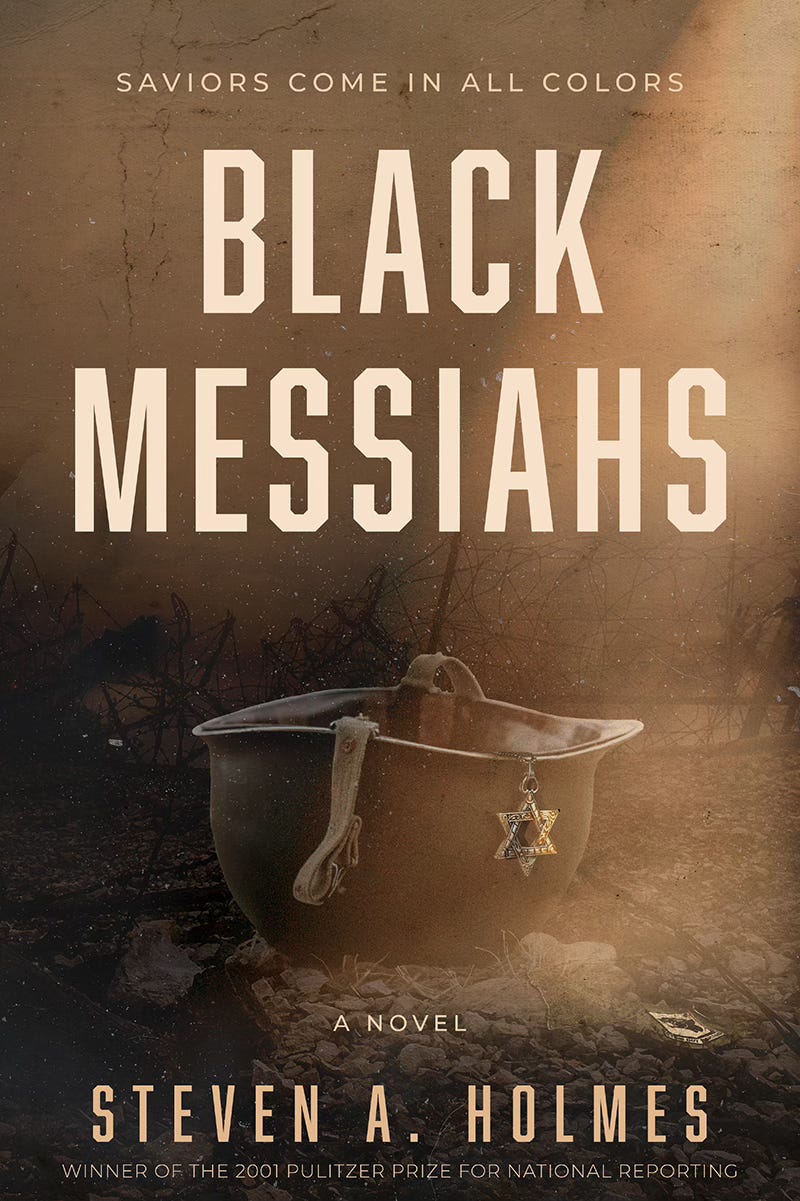
Samuel Pisar went on to a career advising presidents and practicing law. His story inspired the remarkable new novel by Steven A. Holmes, a Pulitzer-Prize winning journalist and my former colleague at CNN.
Steve joined me at Now It’s History to discuss Black Messiahs. The book wrestles sensitively with the racism that oppressed blacks in America as they joined the fight against the Nazi regime, which murdered six million Jews.
In our conversation, we discussed the challenges facing a lifelong journalist who turns to fiction for the first time, the real-life stories behind the novel and the ways Steve relied on his own life experiences to shape its characters.
I hope you enjoy the discussion — and go on to read the book.