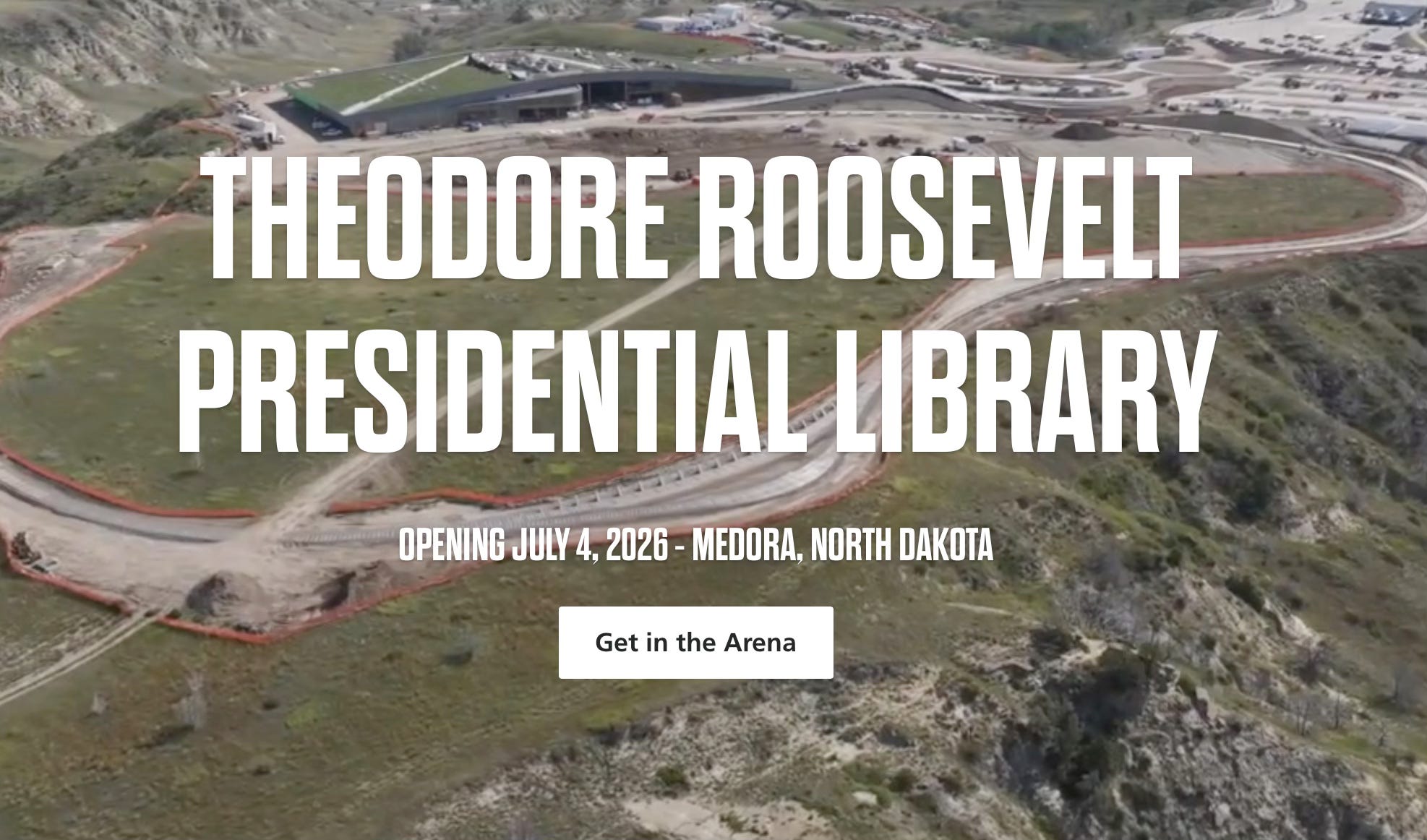
When the New York Times published its annual list of “52 Places to Go” in 2026, traditional travel destinations like Los Angeles, Bangkok, Memphis, Big Sur and Iceland were included. But so was Medora, North Dakota — in the heart of the state’s Badlands.
That is where — on July 4, 2026, more than 107 years since Theodore Roosevelt died —the nation’s 26th president will finally be honored with a presidential library. It will also be the day the U.S. celebrates its 250th anniversary.
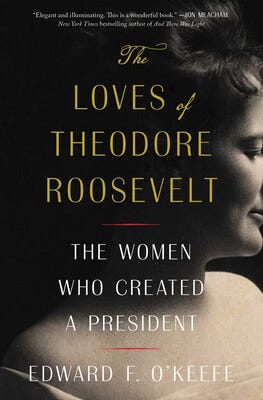
In my podcast with TR Library CEO Edward O’Keefe, we explore why the library is sited in North Dakota and how the Badlands helped shape TR’s character and career. Ed is also the author of The Loves of Theodore Roosevelt: The Women Who Created A President. He talks in this conversation about the profound influence several women had on Roosevelt, including his mother, two wives, two sisters and his irrepressible daughter Alice Roosevelt Longworth.
More than most of the presidents of the early 20th century, Roosevelt feels relevant to our time. He presided over the country in an era of extreme inequality in wealth, when immigration stirred controversy and when a muscular foreign policy and the Monroe Doctrine were in the news.
As Doris Kearns Goodwin has written, TR took hold of the “bully pulpit” of the presidency, building a strong relationship with journalists that helped him shape the messages he shared with the nation. No longer was the president a distant, dignified figure far away from the lives of most Americans. He now would become a flesh-and-blood personal leader who played a prominent role in the everyday lives of most people and whose idiosyncrasies would become the topic of talk around the dinner tables of families from coast to coast.
One of the unforgettable scenes in Ed’s book recounts TR’s first bison hunt in the Badlands, in September, 1883. After days of looking, he and a hunting partner came across the “great beasts.” Roosevelt aimed for the largest animal’s shoulder but instead hit its ribs, and it galloped away. His partner managed to intercept the buffalo.
TR fired again and missed.
“As I urged the horse still closer — for it was very dark — the bull turned... and charged me,” Roosevelt wrote. “The lunge of the formidable looking brute frightened my pony, and as he went off he threw up his head and knocked the heavy rifle I was carrying against my head with such force that it gave me a pretty severe cut on the crown, from which the blood poured over my face and into my eyes so that it blinded me for the moment.”
Then the “infernal beast escaped after all.”
As with other reverses in his life, Roosevelt didn’t let this defeat deter him. He kept hunting and returned to New York with the head of a bison and other mounted creatures he would install in Sagamore Hill, his summer home in Oyster Bay, Long Island.
On February 14 of 1884, TR suffered the unimaginable loss of his wife Alice and his mother on the same day in the same house in New York City. To cope with his grief, he journeyed later that year to the Badlands, where the epic scale and beauty of the landscape soothed Roosevelt’s mind.
So did the women around him, including his childhood friend, second wife and future First Lady, Edith Kermit Carow.
Ed O’Keefe, who was born in North Dakota, explains in our conversation how this mix of influences helped mold one of America’s most distinctive presidents.