

It’s the kind of question that keeps biographers up at night: Why did the author of one of the most influential economics papers of the 20th century almost fail his exams for a sociology degree at the London School of Economics?
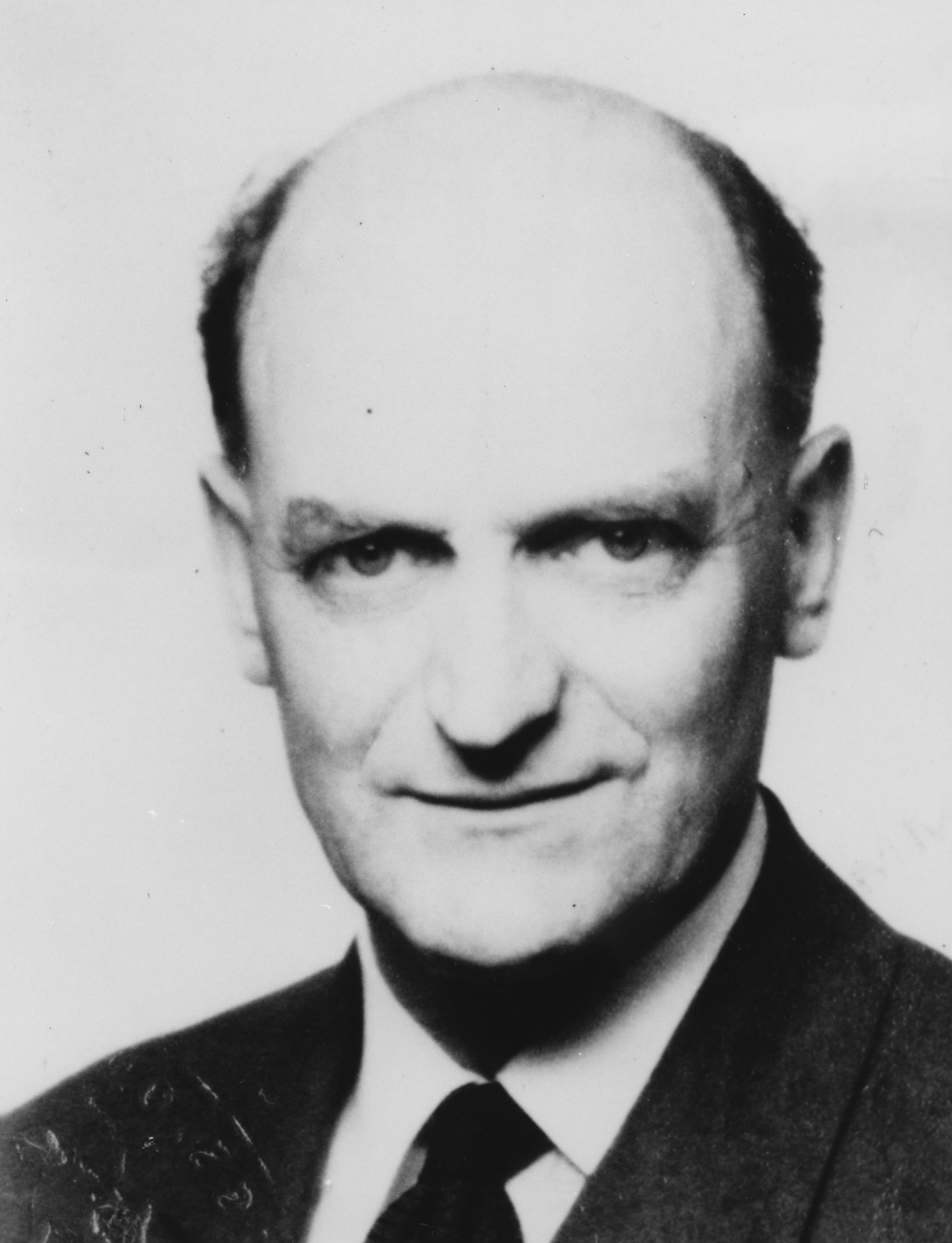
A.W. Phillips, the New Zealand-born scholar who wrote that journal article and graduated with a barely respectable “pass” grade, was considered a genius by his colleagues. His work on inflation and unemployment influenced the decisions of policy makers around the world for decades.
Nine years after Phillips’ embarrassing exam result, he was named to a highly prestigious professorship in his department at the London School of Economics.
A fellow economist, A.G. Sleeman, wrote in a 2010 issue of The Economic Record that “the more one learns about Phillips the more astonishing he seems.”
Alban William Housego Phillips — known to his friends as “Bill” — traveled widely as a young man in a turbulent time, venturing from Australia to Japan and Japanese-controlled Manchuria in the 1930s before reaching Moscow on the Trans-Siberian Railroad and then heading for Britain.
He showed ingenuity and courage in trying to fight off Japanese invaders in Singapore and Java. He spent three and a half years in prisoner-of-war camps where he risked death at the hands of prison guards by secretly building miniature radios to keep fellow inmates aware of the war’s progress. His seven languages included Russian and Chinese.
Phillips’ landmark 1958 paper, with the uninviting title of “The Relation Between Unemployment and the Rate of Change of Money Wage Rates in the United Kingdom, 1861-1957,” was published in the journal Economica. It gave birth to the “Phillips curve,” which would become the lens through which economists, finance ministers and central bankers around the world viewed tradeoffs between inflation and unemployment.
At times when the jobless rate is low, wages and prices tend to go up, since employers have to pay more to attract workers whose skills are in great demand. When unemployment is high, workers are just happy to have a job and willing to accept relatively lower wages, enabling producers to avoid hiking prices.
Yet the author of the famous curve said he tossed off his influential paper over a weekend — he called it a “rushed job” — and never really considered it a definitive guide to how government should try to discourage unemployment and avoid rampant inflation. He was making a careful set of observations about statistical patterns rather than proving there was a durable causal relationship driving inflation and unemployment, his biographer Alan Bollard wrote.
“I did not do very much,” an ailing Phillips told colleagues at a 60th birthday gathering, months before he died of a stroke. “I just put out a few hares for other people to chase.” Bollard used A Few Hares to Chase as the title of his Phillips biography.
Searching for stability
What makes Bollard’s book particularly interesting is that he ties Phillips’ economic scholarship to the scars left by his tumultuous wartime life.
In his struggle to survive World War II, Phillips saw firsthand the awful consequences of political and economic upheaval. Bollard argues that the experience inspired him to study sociology, though he later dismissed it as “a combination of ethics, social statistics and pseudo-science.” It eventually led him to examine the possibility of using economics to promote stability, fostering democracy and free enterprise.
You don’t have to reach back to the late 1970s — when stagflation doomed Jimmy Carter’s reelection and led to the conservative Republican administration of Ronald Reagan — to see just how destabilizing high levels of inflation and unemployment can be. In recent times, we saw how the Covid-era spike in inflation destroyed President Joe Biden’s popularity and helped put Donald Trump back in the White House.
Trump’s broken promise to focus on reducing inflation is perhaps the greatest single factor explaining why Republicans are trailing badly in the polls for next month’s midterm elections. The latest bump up in inflation has been aggravated by Trump’s ill-advised attack on Iran. It is exacting a high price from consumers dependent on gasoline, diesel fuel and heating oil — or any of the myriad of products affected by those fuel prices.
The Associated Press-NORC Center for Public Affairs Research reported last week that approval of Trump’s handling of the cost of living has sunk to 17%. Roughly two-thirds of Americans blame the president’s policies for inflation. Trump and the Republicans would be in an even worse plight if unemployment shot up, but it remains relatively low, at 4.2 percent. That is in part due to the huge investments artificial intelligence companies are making in data centers.
Not wasting time
Bill Phillips’ great-grandfather Samuel was one of the more than 162,000 British convicts transported to Australia for their crimes — in his case, burglary. After arriving in a new land, Samuel met and conceived a child with Catherine Storey, who soon married him. The couple moved to New Zealand in 1857; their second child Herbert was Bill’s grandfather.
Herbert’s son Harold, also known as Housego, won an auction to rent uncleared land in the Hawke’s Bay region. The government had purchased it from the indigenous Māori people.
Housego Phillips made his dairy farm a standout in the region for its indoor plumbing and electricity generated by a waterwheel. The family donated two of their farm’s acres for the building of a church. The first baby to be baptized there was Bill Phillips, in 1914.
“Being born into the first electric house in the district provided an enquiring child like Bill with a big advantage—being able to study and read in the evenings,” Bollard noted. “Later the family could listen to the wireless.” Soon Bill and his brother would be building their own radio sets.
Bill excelled at school, despite spending four hours a day getting there and back:
Each morning Bill had to clean up after early milking, grab a quick breakfast, cycle down the dirt road, and then six miles up the main highway to Tahoraiti mill stop. There he had a concession ticket to travel with several other students in the guard van on a local goods train. Alighting at Dannevirke Station, there was a brisk walk uphill three-quarters of a mile to the high school, where he would usually arrive while the morning assembly was in process.
To avoid wasting time on his commute, he fashioned a book stand and attached it to his bike’s handlebars.
Staying in school till he reached college age didn’t seem to be an option. At 15, Phillips left home for a job in a remote town as an apprentice electrician on a hydroelectric project. In his spare time, he ran a side business: the movie house, where he began showing the first talkies.
When his five-year apprenticeship ended, Bill rejected the idea of returning to the farm and traveled to Australia. He worked on a banana plantation and a copper mine before joining forces with a crocodile hunter. Bill remembered that they “shot a few crocs but not enough to make big money.” Again, he didn’t waste any time — during these adventures, he began studying electrical engineering.
Phillips’ eventual goal was to reach Britain, but he chose a very roundabout route, via Japan, Korea, Manchuria, Siberia, Moscow and points west. Visiting Hiroshima while the Japanese were at war in China, he was briefly arrested as a suspected spy for taking photos of troops. Once in London, he passed his exam for certification as an electrical engineer. After the outbreak of World War II, Phillips joined the Royal Air Force as an armaments officer. He was posted to Singapore.
There he was tasked with trying to equip the RAF’s fighter planes to better confront the superior arms of the Japanese. Though he made things better, British forces were ultimately overwhelmed. Forced to evacuate, Phillips took refuge as one of more than 2,100 people on the Empire Star, a cargo ship which had been designed to accommodate only 23 passengers. It left port three days before the British surrendered Singapore to Japan.
His citation as an MBE (Member of the Most Excellent Order of the British Empire)
tells the rest of the tale:
On February 12th 1942, when the ship on which this officer was taking passage to Java was attacked by enemy aircraft, he obtained an un-mounted machine gun, quickly improvised a successful mounting, and operated the gun from the boat deck with outstanding courage for the whole period of the attack, which lasted for 3½ hours. Even when the section of deck from which he was operating was hit by a bomb, Flying Officer Phillips continued to set a most valuable example of coolness, steadiness and fearlessness to all in his vicinity.
After the Allied forces surrendered Java in March, Phillips traveled 100 miles to Java’s south coast, determined to elude capture by the Japanese. He and two companions planned to convert an old bus into a boat they could sail to Australia but Phillips was captured. His new destination was a POW camp at Bandung.
Prisoners were kept on slim rations, but they were spared the ordeal of boredom thanks to an extensive array of classes put on by the British inmates. Phillips taught some classes and studied Chinese with the help of prisoners from China. He indulged his technical expertise by making immersion heaters that prisoners used to brew tea. He developed miniature radios that could be hidden in upholstery or even in the wooden clogs prisoners wore after their shoes fell apart.
The war ground on. Japan refused to surrender in 1945, despite the death of its ally, Nazi dictator Adolf Hitler, and the capitulation of Germany. Japan’s POW camp leaders were told to fight to the end. Guards moved Phillips and his fellow inmates to the crowded Landsop Camp and cut food rations. The prisoners were instructed to start digging what they presumed would be their own graves.
When the prisoners’ radio failed, they broke into the office of the camp commandant to steal a crucial part from his radio set. Three nights of work by Phillips revived the radio just in time for him to learn, from an Indian news broadcast, of the dropping of the atomic bomb on Hiroshima. The war soon ended, but its effects lingered for the malnourished Phillips: he was hospitalized for about a month.
Bollard wrote:
His weight had dropped dangerously. He had a serious nicotine addiction, his digestion was ruined, and worst of all, he still had to come to terms with the mental damage the camp had inflicted…
His thirst for physical adventure might have been quenched. But now Bill Phillips had developed a new thirst, an intellectual one, to understand what had happened and to help make things better.
Why sociology
As Bollard notes, Phillips was now an accomplished electrical engineer and linguist, with considerable hands-on knowledge of farming. Why would he pick sociology as his subject at the London School of Economics?
“He had been living through the most disruptive of times, having experienced world depression, watched a battle of civilizations in China, seen a struggle of totalitarian movements in Europe, and personally experienced the brutal subjugation of peoples by another race. Like so many others, he would have been struggling to understand all this, to answer the question ‘Why did this happen?’”
Phillips floundered in the LSE sociology program; he didn’t fit in with the rest of the students, who were much younger, and he seemed adrift. He even failed applied economics and economic history.
He had returned to Britain at a grim time. Even though the nation had won the war, its people were miserable in victory: they suffered from power cuts and a food shortage, made worse in the winter of 1947 by record cold and snow.
His biographer cites many possible reasons for Phillips’ poor grades: health issues, loneliness, Britain’s postwar food rationing and cold climate, homesickness for New Zealand and guilt over leaving behind his family, post-traumatic stress from his POW experience and even an addiction to nicotine. But the overriding reason likely was a new project Phillips was developing: a machine that used water levels to represent the flows of the key variables that go into the functioning of a capitalist economy.
Bollard, who re-assembled one of Phillips’ devices decades later, described it this way:
The machine consisted of a series of tanks attached to a steel upright frame, all connected by hoses and pipes, each tank representing a sector of the economy: households, business, government, and foreign sectors. Each tank had a device (a float or a servo-mechanism) to measure water levels or flows. When these reached certain levels they triggered cords on pulleys that in turn transmitted pressure to other tanks. Other mechanisms represented interest rates and exchange rates. Water was pumped around the whole system. And at the bottom of the contraption a holding tank represented total national income.
Bollard suggests that Phillips “had lost interest in sociology, and the machine had now become his real passion.”
American economist Abba Lerner branded Phillips’ machine the MONIAC, for Monetary National Income Automatic Computer — a name, Fortune magazine said, meant “to suggest money, the ENIAC [electronic computer], and something maniacal.”
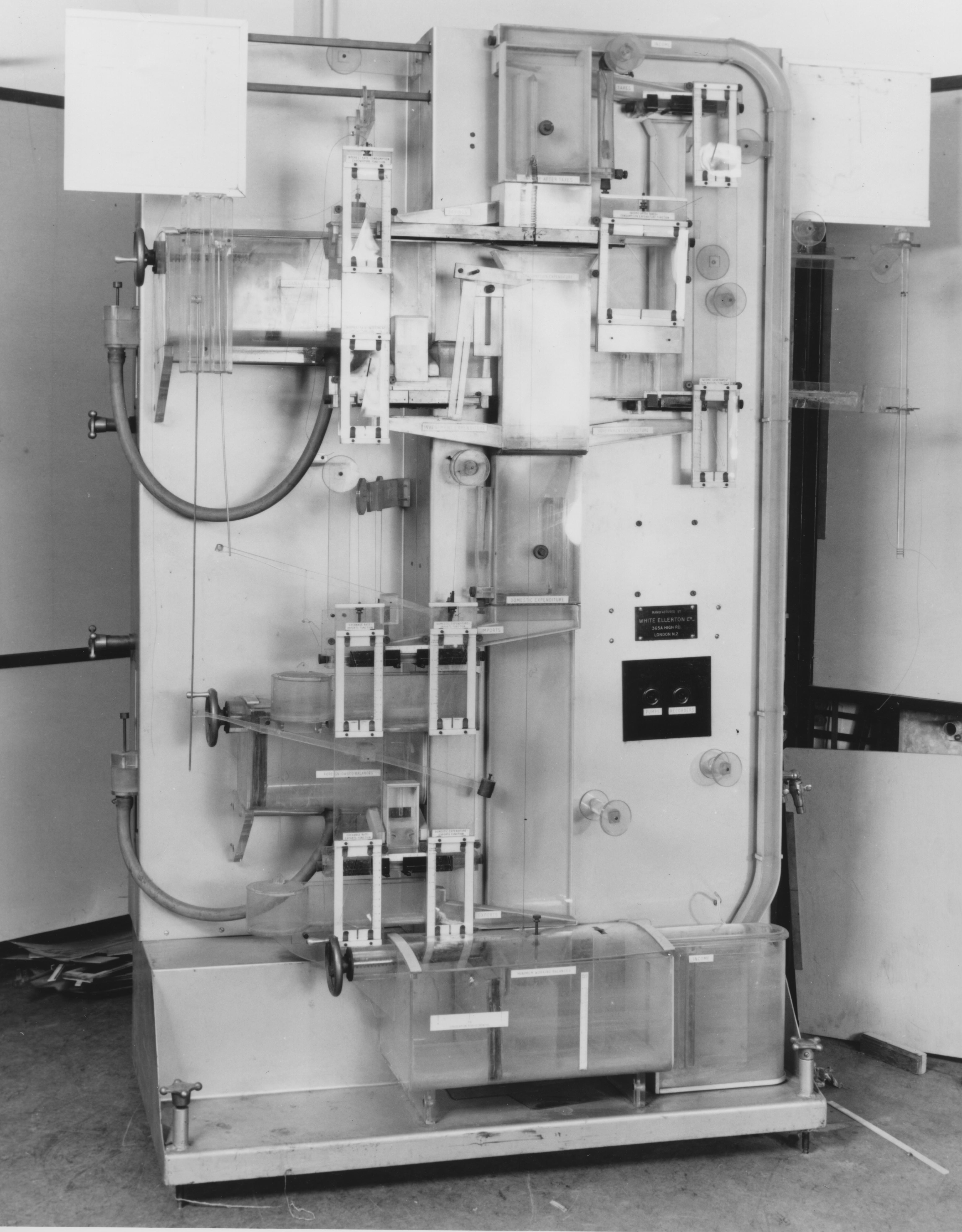
In writing what would become his most famous work, the Economica paper, Phillips approached the economy as an engineer would fine-tune a machine. By twirling the dials, he hoped to find a series of settings that would promote economic stability, with workers fairly compensated for their growing productivity while avoiding levels of inflation that would sap their ability to buy goods. (In his hydraulic device, he had been forced to drill a hole to let out water when inflation developed in the economy.)
Bollard wrote:
It is hard to imagine a more volatile period than that which Bill Phillips had already lived through: the destructive effects of the World War I reparations, the abandonment of the gold standard, the Great Depression, the rise of totalitarian governments, World War II, and post-war austerity had all produced very difficult economic conditions. These events constituted major shocks to economic stability.
Phillips’ article on wages and unemployment captured the interest of two American scholars: Paul Samuelson and Robert Solow. In a May 1960 article for the American Economic Review, they applied a version of the Phillips curve to the U.S. economy.
While explaining that there were many caveats and the finding could only be relied on in the short term, they posited that an unemployment rate of 5 to 6 percent would be needed to keep wages from rising beyond the increase in productivity. If policy makers instead wanted to limit unemployment to a much more tolerable level of 3 percent, they would have to be willing to accept prices rising by as much as 4 to 5 percent.
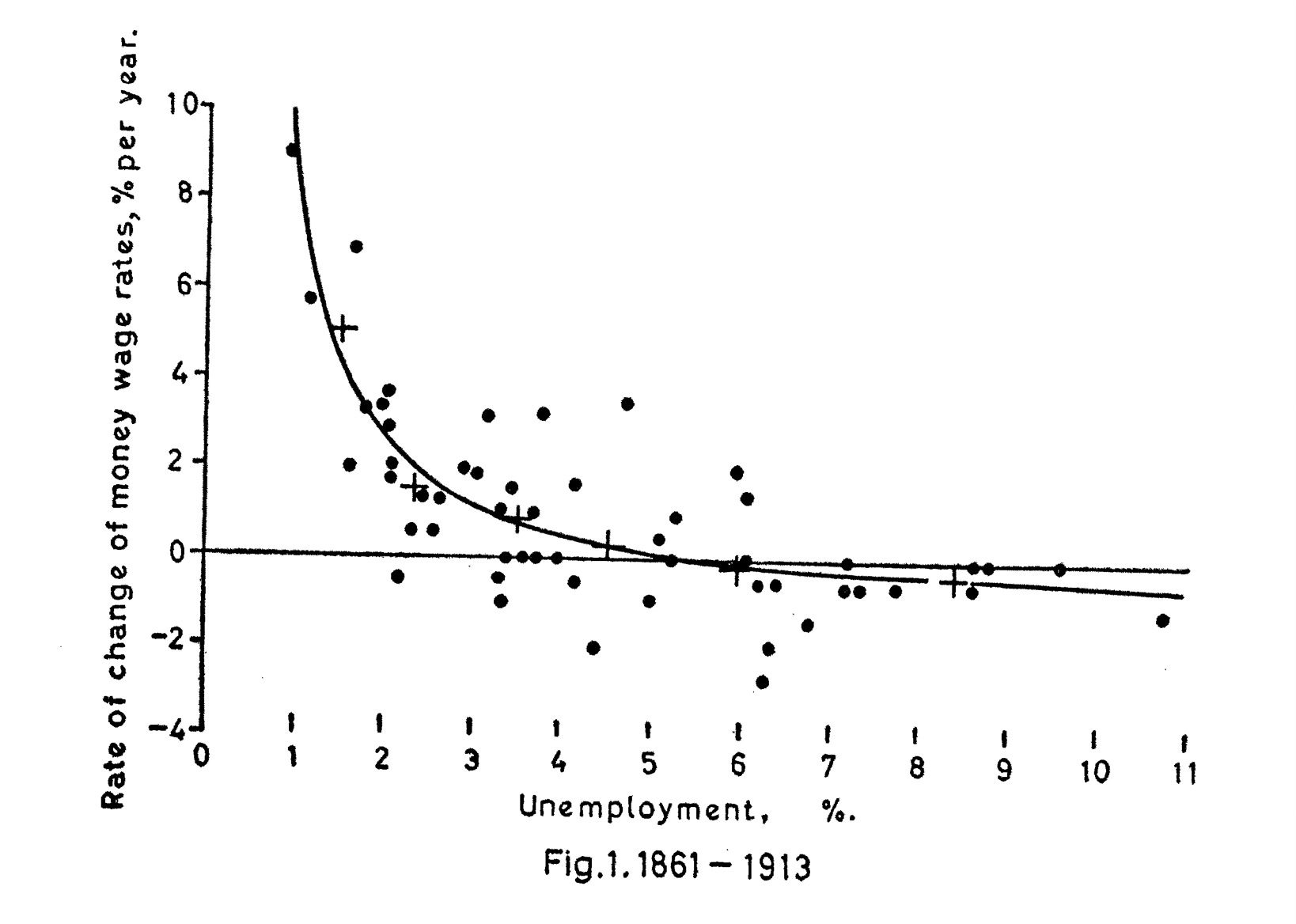
It was a tradeoff that would leave many people unhappy. And as the economy evolved into the 1970s, the relationship altered. It turned out that you could have the worst of both worlds — with joblessness and prices going up at the same time.
Economist Arthur Okun developed a “misery index” to track the concurrence of both high inflation and high unemployment. It peaked at roughly 22 percent in mid-1980. In the 21st century, the peak was 15 percent during the Covid pandemic; today it is a much more tolerable 7.6 percent.
Still, the inflation component of that index is sticking in the craw of many voters. They are disillusioned or in some cases furious that Trump soon abandoned his campaign promise to end inflation. In August 2024, while campaigning in Montana, Trump had declared, “Starting on Day 1, we will end inflation and make America affordable again.” Instead he imposed tariffs that made goods costlier.
The battle goes on
In 1968, Bill Phillips made what turned out to be a premature judgment about the struggle to control inflation and unemployment. “Bill noted improvements in stabilizing output and employment since the war,” wrote Bollard. “He felt that Western governments had achieved a fair degree of success over the last few decades in controlling fluctuations in economies…Here he uncharacteristically let slip what lay behind the economics for him: ‘The degree of success is probably sufficient to permit the survival of free-enterprise systems and democratic forms of government, but further improvement is clearly desirable.’”
His words came before the dramatic leaps in inflation in the 1970s and during the Covid pandemic of the early 2020s. But he was right about the connection between unstable economies and political turmoil.
Academic research shows why inflation is particularly insidious. In an April 2024 paper for the National Bureau of Economic Research, Stefanie Stantcheva wrote that Americans she surveyed feel that inflation “systematically erodes their purchasing power” and that wage increases don’t keep up with higher costs.
“Inflation also provokes stress, emotional responses, and a sense of inequity, as the wages of high-income individuals are perceived to grow more rapidly amidst inflation,” Stantcheva observed. As for the Phillips curve-inspired idea of accepting higher prices as a tradeoff for lower unemployment and a more robust economy, the concept is “typically not recognized by respondents.”
When people see their earnings unable to cover rising grocery bills, increased energy costs and growing rents or mortgage payments, they look to government for solutions. And Trump isn’t providing them.
Bill Phillips’ curve isn’t bending the president’s way. That may be the biggest factor influencing next month’s election.
What sank the Democrats

The Covid-19 public health emergency ended in the United States on May 11, 2023.