Hours after hijackers crashed planes into the World Trade Center and the Pentagon on September 11, 2001, journalist Peter Bergen said on CNN that the “most likely suspect” in the attacks was Osama bin Laden, the leader of al Qaeda.
Bergen had good reason for his view. Terrorists linked to al Qaeda detonated a truck bomb in the World Trade Center garage on February 26, 1993, killing six people but failing to bring down the towers.
Bergen traveled with a CNN team to the mountains near Jalalabad in Afghanistan to produce the first television interview with bin Laden in March 1997. Bin Laden called for attacks against U.S. military targets. His organization went on to target U.S. embassies and the Navy destroyer USS Cole.
Bin Laden’s goal was to drive the U.S. military out of the Middle East. As Bergen makes clear in his comprehensive new book All the Presidents’ Wars, the al Qaeda terror plot turned out to be a huge miscalculation. Instead of driving Americans away, bin Laden lit the spark for a quarter century of U.S. wars in the region.
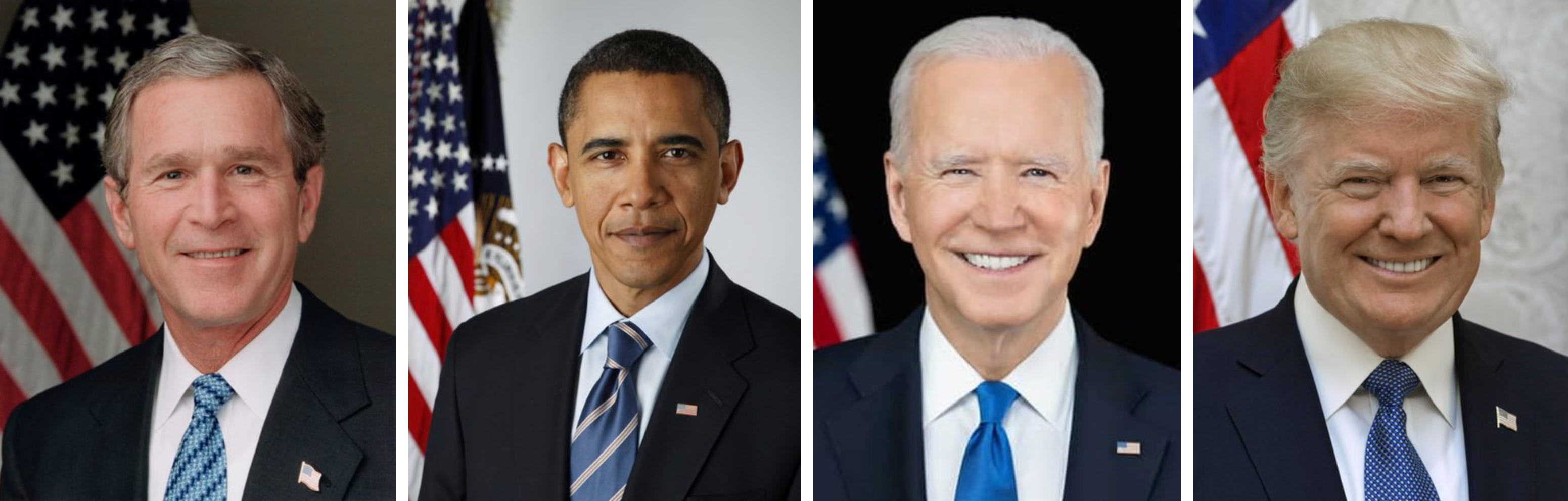
What Bergen does particularly well in his book, which is receiving rave reviews, is to document how four presidents — George W. Bush, Barack Obama, Joe Biden and Donald Trump — made a staggering number of mistakes in prosecuting wars in the Middle East.
I worked with Peter as his editor for more than a decade at CNN. In our podcast interview, he speaks incisively about the history his book covers.
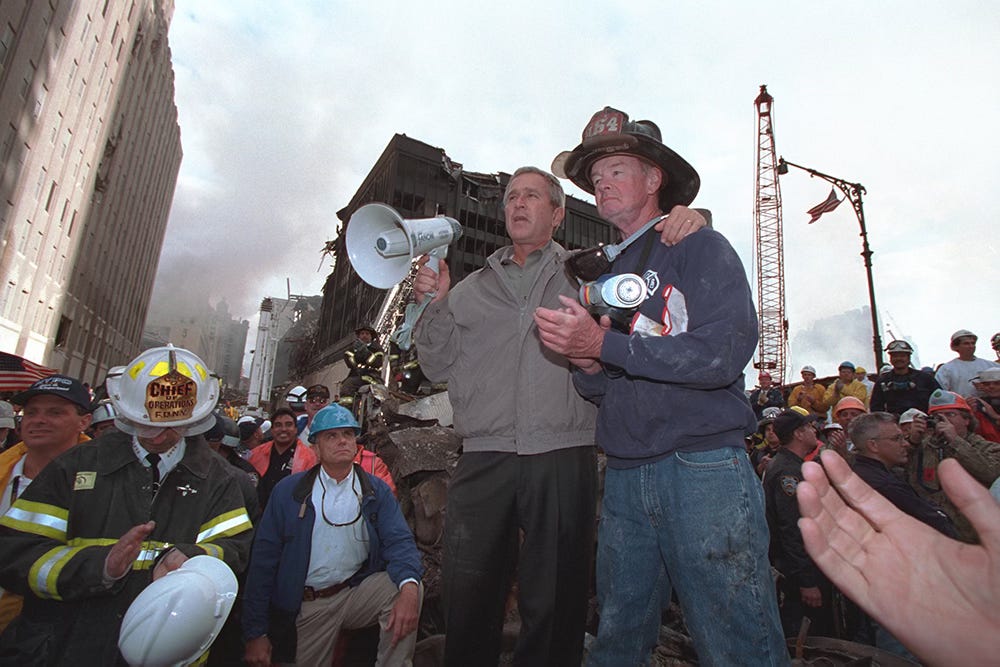
In the summer of 2001, Bush ignored a series of increasingly urgent CIA warnings that bin Laden planned attacks on the U.S. In the immediate aftermath of 9/11, Bush administration officials began making the case for a war to oust Iraqi dictator Saddam Hussein even though he played no role in the attacks on the U.S.
Afghanistan’s Taliban regime was hosting bin Laden, and within three months, a force of fewer than 1,000 American troops and CIA operatives ousted the Taliban. The Bush administration failed to commit additional troops to capturing bin Laden when he was hiding out in the mountains near Tora Bora.
U.S. Defense Secretary Donald Rumsfeld told Bush that it was vital to launch a war against Iraq because there weren’t enough targets to attack within Afghanistan, and “we need to bomb something else to prove that we’re big and strong and not going to be pushed around by these kinds of attacks.” That war of choice, deepened by a series of catastrophic policy mistakes, spawned an insurgency that lasted for years.
Bush framed the war as the “global war on terror,” which implied an endless agenda of conflict. The successful raid on bin Laden’s compound in Abbottabad, Pakistan, in 2011 could have provided an opportunity for the U.S. to exit the wars, but the rise of ISIS drew America back in.
Another perceived off-ramp was the agreement with the Taliban reached by President Donald Trump’s first term administration. When President Joe Biden carried out the withdrawal from Afghanistan, it turned into a shambolic exit that triggered a decline in Biden’s approval ratings and arguably led to Vladimir Putin’s invasion of Ukraine and the return of Trump to the White House.
Trump’s continuing war with Iran suffers from even greater strategic mistakes than the wars that preceded it. Unlike earlier conflicts, there were no supportive UN or congressional resolutions.
“You actually do want to have a congressional debate about these things,” Bergen told me. “In the end, presidents may choose to ignore congressional resolutions. But the point is, you need a public debate about what are we doing. Why are we sending people into harm’s way? And that never happened with Iran. Trump really never made the case. If he made a case at all, it was on February 28th when the war started, when he made a speech about it in the middle of the night. But, you know, the reason that this is the least popular war since polling on this subject has occurred is there was no public buy-in. 41% of Americans thought the Iran war was a bad idea when the war started.”
I hope you enjoy my conversation with Peter Bergen.