

At 1:40 a.m. on July 18, 1920, William Washburn Nutting and two crew members headed out of Baddeck, Nova Scotia, on a new 45-foot sailboat. Their ambitious goal: to reach England, observe the British International motorboat races at Cowes and head back across the Atlantic to the United States.
The idea of sailing a small boat across the North Atlantic hatched the previous autumn when Nutting, who was the editor of Motor Boat magazine, met Canadian aviation pioneer Frederick (“Casey”) Baldwin on a yacht in Nova Scotia’s Bras d’Or Lake. Emboldened by sips of Johnnie Walker, they fantasized about the kind of vessel required for the trip. Two days later, they sketched out the ship’s lines at the nearby laboratory of inventor Alexander Graham Bell. A leading naval architect, William Atkin, drew up the final plans for what would become the Typhoon.
Nutting’s 1921 book The Track of the Typhoon is one of the memorable books I read this year. His joy and candor make for an engaging adventure story, the kind of account best enjoyed in the safety of a warm room — and one that seems appropriate for 2026, a year of big, and sometimes foolish, gambles.
In the days before satellite weather, GPS navigation, electronic depth finders and widely accessible radio communications, taking such a small boat through Atlantic storms with seas of 20 feet or more seemed foolhardy. That was precisely the kind of risk-averse thinking that upset Nutting. He wrote that everyday life had become “very easy and safe-and-sane.” He worried that “Safety first” would become “our national motto.” More than ever, he added, we need “sports that are big and raw, and yes, dangerous.”
Typhoon zipped smoothly across the Atlantic to Britain. Nutting brings you into the cockpit with him as he steers:
It was a roaring, wild, wonderful night — the sky pitch black, the sea a driving stampede of weird, unearthly lights. The countless crests of breaking waves made luminous patches in the blackness as though lit by some ghostly light from beneath the sea, and the tops, ripped off by the wind, cut the sky with horizontal streaks of a more brilliant light, like the sparks from a prairie fire.
On the return voyage, Nutting had three crew members, but his expert navigator Casey Baldwin couldn’t make the trip back. Heading for New York, Typhoon ran into heavy winds and seas, was knocked down twice and nearly lost one of its crew members who went overboard. Still, it was with great pride that Nutting tied Typhoon to the dock at St. George, Staten Island.
The recklessness embraced by Nutting a century ago on his 7,000-mile journey seems very contemporary at a time when much bigger things than the fate of a small yacht are at stake.
The President of the United States orders an attack on Iran without building an argument in advance for military action to the American public and the nation’s allies. The CEO of a huge technology company is ousted and then reinstated days after admitting he was unfaithful to his wife, amid reports of his alleged affairs with a former customer executive suspected of spying for China and with an employee who reports to him. The federal government runs a deficit of nearly $2 trillion, adding to the $40 trillion accumulated debt at a time when interest payments are already consuming one of every seven dollars of government spending.
Matches and gasoline
Rough seas didn’t deter Bill Nutting from further exploits. In 1922, he founded the Cruising Club of America. One of its goals was to urge people to “make adventurous use of the sea.” That happens to be the title of a 2022 book by Tim Murphy which recounts the experiences of CCA members over the previous 100 years. (Murphy also wrote the foreword to a 2025 Lyons Press edition of Nutting’s The Track of the Typhoon.)
Among the stories Murphy tells is of Nutting’s final trip: a 1924 journey with fellow small boat enthusiast Arthur Hildebrand. They bought a 42-foot cruiser in Norway and named it after the Norse explorer Leif Erikson. With two other crew members, they headed from Norway to Iceland and Greenland, aiming to reach Labrador. But their ship vanished after leaving Julianehaab, Greenland, and was never found — perhaps trapped in the ice, or fallen victim to rough seas.
Bill Nutting was “a good sailor in some ways, but foolhardy and had too much courage,” one of the CCA’s charter members said, according to Tim Murphy. A Motor Boat magazine staff member observed, “Bill was a daring and often reckless sailor who took risks. He may have been swamped or drowned when all hands were asleep, or he may have had a fire on board as he was not too careful with matches around gasoline.”
Overseas adventures
Why do holders of high office so often act contrary to the way reason points and enlightened self-interest suggests? Why does intelligent mental process seem so often not to function? — Barbara Tuchman, The March of Folly.
There seems no limit to the number of stories that can be told of national misadventures. Recent events led me to two superb books by journalists detailing how politics spiraled downward in two nations American policymakers never quite understood.
William Neuman’s Things Are Never So Bad That They Can’t Get Worse vividly describes the moral and economic bankruptcy of the regimes of Venezuela’s Hugo Chávez and Nicolás Maduro. But it also faults the U.S. for adopting a series of ineffective anti-Maduro policies that deepened Venezuela’s suffering. Neuman’s 2022 book predates the Trump administration’s surprise seizure of Maduro, who faces trial next year in New York. Trump continues to back Maduro’s disciple as the dictator’s provisional successor, vows to extract billions in oil revenue from the country and ducks the question of free elections for Venezuela.
In the 2025 book King of Kings, Scott Anderson unfurls decades of blunders in U.S. dealings with Iran. Overthrowing a democratically chosen leader, enabling the Shah’s repressive and corrupt regime, underestimating the malign threat of an Islamic republic, helping enhance the authoritarian menace of Ayatollah Ruhollah Khomeini and inadvertently strengthening Iran as a Middle East power — the traces of all of these monstrous mistakes hover in the background as Trump vacillates between peace gestures and threats of all-out war with Iran.
In Khomeini’s Iran, the British scored a remarkable, but still little known, intelligence coup. Ben Macintyre’s new book, Redwood, focuses on a disillusioned KGB major stationed in Tehran who comes to believe that Western doctors can cure his erectile dysfunction. Macintyre is a pro at conveying the nail-biting suspense of the Russian spy’s 1982 escape, orchestrated by MI6, the UK’s foreign intelligence agency. (For fans of spy fiction, Mick Herron’s Clown Town continues his streak of Slow Horses books that are hilarious and worth reading even if you’ve seen the Apple TV series.)
In All the Presidents’ Wars, Peter Bergen vivisects the War on Terror, unleashed by President George W. Bush after the 9/11 attacks on America 25 years ago and carried on by Presidents Obama, Trump, Biden and Trump again. As Bergen, my former colleague at CNN, fully demonstrates, American officials made so many wrong turns, out of ignorance and arrogance, and the world is still paying the price.
Decades earlier, the U.S. became mired in a grueling war on the Korean peninsula. David Halberstam’s 2007 account The Coldest Winter captures both the brilliance of General Douglas MacArthur’s Inchon landing and his infamous failure to prepare for the possibility China would send hundreds of thousands of troops across the Yalu River to confront the Americans.
Halberstam’s dogged research enabled him to tell the story from the point of view of rank-and-file soldiers who had to cope with the brutally cold weather in lightweight uniforms, often with a lack of adequate rations and constantly with the fear of being outnumbered in combat.
Trump II
There may soon come a time when bookstores won’t be crowded with volumes on the campaigns and White House terms of President Donald Trump. But we’re not there yet. Regime Change, by Maggie Haberman and Jonathan Swan, belongs to the “shocking, but not surprising” category of Trump books.
Trump returns to the White House furious at the media that covered his 2020 defeat, prosecutors who investigated him and the politicians who abandoned him after the January 6, 2021 assault on the Capitol. His new team has ambitious plans to get revenge and turn back the tide of America’s liberal culture. But Trump’s feckless execution of those plans helps ensure that the new regime’s overhaul is only partially complete — and subject to reversal by the new Congress and a potential Democratic successor in the White House. (For a briskly written account of the powerful private- and public-sector leaders who knuckled under to Trump in 2025, read Jacob Weisberg’s Profiles in Cowardice.)
Regime Change ends with a revealing epilogue based on the two authors’ White House interview with Trump. It turns out that the president’s belief that he is an all-powerful world historical figure rests on the slim and shaky assessment of golfer Gary Player’s former caddy.
Lives
Ron Howard’s new documentary, Avedon, shows how a fashion photographer became one of the preeminent visual chroniclers of the second half of the 20th century by centering his work on faces, particularly of the famous. In the world of history, it is whole lives, not just faces, that consume our attention.
Here are a few of the biographies that drew my interest this year:
In Josh Ireland’s The Death of Trotsky, Soviet dictator Joseph Stalin relentlessly hunts down Leon Trotsky halfway around the world, aiming to erase his onetime rival from history and from the international Communist movement. Along the way, the doomed Trotsky despairs as his family and his supporters are targeted. But he never stops fighting, and, for a time, enlists the help of artists Diego Rivera and Frida Kahlo.
President Jimmy Carter’s one term in office is often wrongly dismissed as a catalogue of endless errors. But, in the 2018 book President Carter, his aide Stuart E. Eizenstat showed that there was far more to the Georgian peanut farmer’s time in the White House. In many ways, his policies set the stage for change and for progress in America in the 1980s.
Two flawed men helped shape the America we live in: In the 2004 book John James Audubon: The Making of an American, Richard Rhodes sketched the life of the peripatetic immigrant who helped make Americans aware of the natural wonders of their continent. In the Pulitzer Prize-winning Lindbergh (1998), A. Scott Berg showed how a shy midwesterner’s quiet intensity won a contest that made him the most famous man in the world. He suffered from round-the-clock media attention and destroyed his own reputation through his flirtations with fascists in late 1930s Europe and America.
Empires of Light, by Jill Jonnes, is not a full biography of its three central characters — Thomas A. Edison, Nikola Tesla and George Westinghouse — but the 2003 account of their interaction at the dawn of the electric age makes for a compelling tale.
A Full Cup, a 2010 book by Michael D’Antonio, focuses on the life of retailing and food industry pioneer Sir Thomas Lipton, who also became a force in the America’s Cup races.
Risky ventures
Patrick Radden Keefe’s London Falling is rightly celebrated for its evocative portrait of the shadowy world of fixers and scam artists in the British capital. Its teenage protagonist poses as the son of a Russian oligarch, to disastrous effect. But the book’s last quarter is padded and ultimately unsatisfying, as Keefe teases the reader with hints of a resolution to the story that never arrives.
Katrina Manson’s Project Maven chillingly describes the Pentagon’s effort to insert AI into the targeting process for using deadly weapons.
In Agrippa, his return to historical fiction about ancient Rome, the resourceful Robert Harris provides plausible conjecture about the rise of Emperor Augustus, through the eyes of his second-in-command.
With the AI stock boom evoking comparisons to the railway bubble, it’s a good time to dig into past market ructions. Liaquat Ahamed’s 1873 and Robin Wigglesworth’s A Fabulous Debt approach the topic from different, though complementary, angles.
A breezy 95-year-old account of America in the years up to and including the 1929 Wall Street crash makes for diverting reading. The author of Only Yesterday: An Informal History of the Nineteen-Twenties, Harper’s magazine editor Frederick Lewis Allen, was a gifted storyteller with a knack for detail.
Compare it with When the Going Was Good, an equally entertaining diversion by another magazine editor, Graydon Carter, written with James Fox. Carter, a co-founder of Spy who went on to lead Vanity Fair, became one of the bold-faced names whose peculiarities he once ridiculed. But he retained the curiosity and frankness he brought to New York as a Canadian striver in the 1970s.
At sea
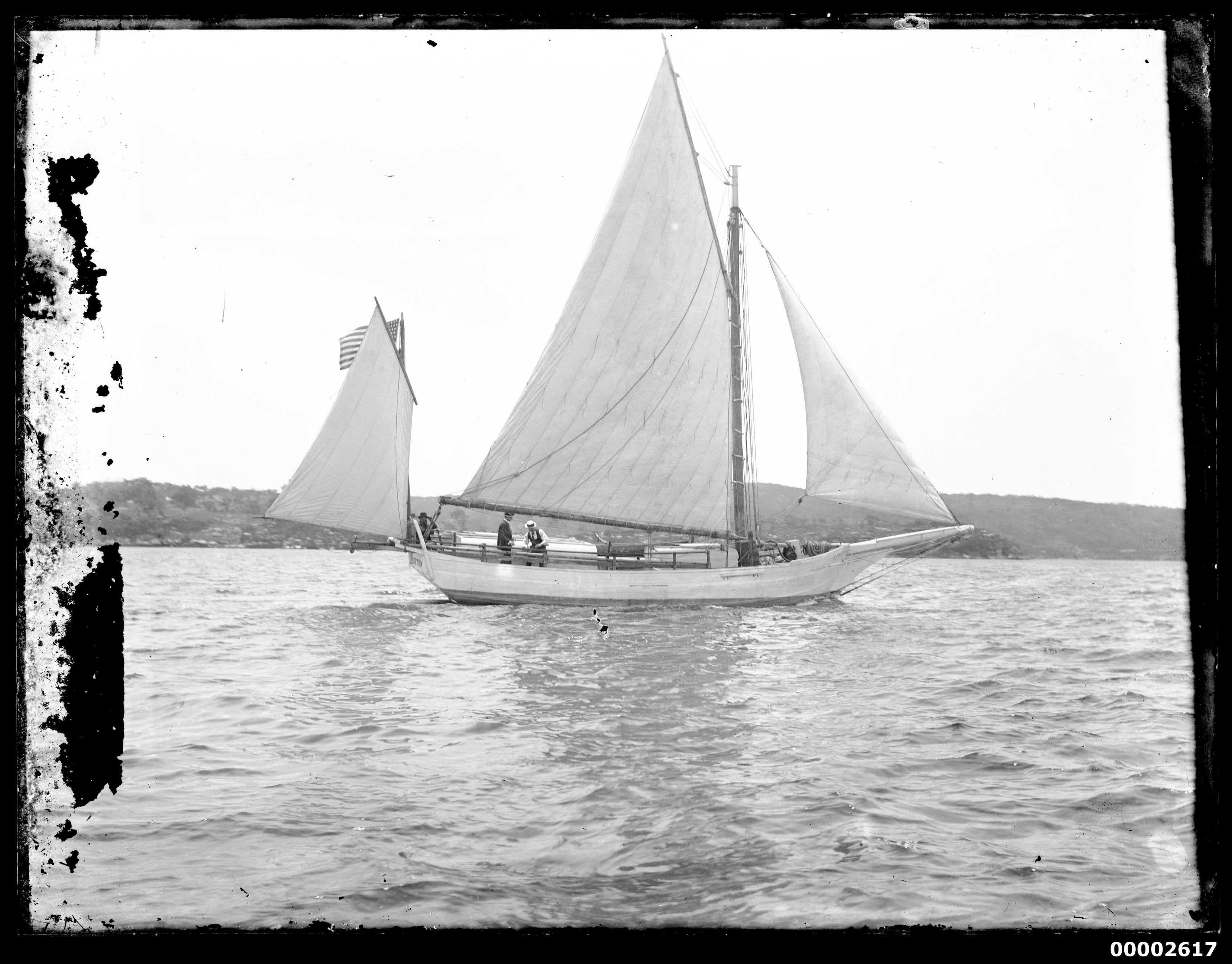
I fell down the rabbit hole of sea stories this year while researching and writing for Newsday the tale of an 87-year-old sailboat that has survived an explosion, sinking, storms, seizure by the government and journeys to the far corners of the world.
Among the most seaworthy volumes: Captain’s Dinner; by Adam Cohen; Resolute by Martin W. Sandler and Shadow Divers by Robert Kurson.
Joshua Slocum’s Sailing Alone Around the World predates Bill Nutting’s voyages by a quarter century. His boat, the Spray, was about eight feet shorter than Nutting’s Typhoon, but survived a three-year circumnavigation of the world. Like Nutting, Slocum eventually vanished at sea. The Nova Scotia-born adventurer sailed from Martha’s Vineyard in November 1909 and was never seen again.
In Slocum’s book, a priceless moment was his description of plunging into the water when his dory was overturned: “I grasped her gunwale and held on as she turned bottom up, for I suddenly remembered that I could not swim.”
Wow, that's a lot of reading you're doing, Richard. And yet, if one can't sail across the ocean alone, what better way to spend one's time? I'll pick one or two issues/books from your list.
First, Barbara Tuchman's March of Folly. If the great popular historian were alive today, I imagine that her fabulous book might have swollen to several volumes by now.
Next, Venezuela. What a tough nut to crack! I watched the place go into slow-motion self-induced collapse from the nearby sidelines of several countries in South America over the course of two decades. Then I saw from closer up in DC (though not part of the inner decision-making circle) when we tried to tighten the screws on Maduro. (Didn't work). No longer part of the system, I'm now anxious to see uncovered the orgy of corruption that has resulted from our "successful" operation to extract Maduro from the country he was plundering. What I do know is that the plunderers below him are still very much in place, maybe more entrenched now than before, and joined now by plunderers on the US side, with obvious close connections to our criminal administration. How will this operation be viewed by history?
Which recalls Iran. Though I have no direct experience there, I know our shared history is littered with mistakes, that in 1953 we toppled a democratically elected prime minister, and that before 1979 the country was a lynchpin of our middle east strategy. I also know the country and culture and people are extremely sophisticated. If only we could get our politics and our diplomacy to work, the potential of partnership would be limitless. Alas, one can always dream.
Great piece.
Atkin cutters are legendary. They chose the right naval archtect. I grew up sailing wooden boats of all kinds and the Atkin cutters were some of the best, but other Halifax cutters bulit by Belknap and Paine were amazing also. Volunteer, 1934, comes to mind. Never read the book but certainly new the story. Except maybe for the Johnny Walker.